



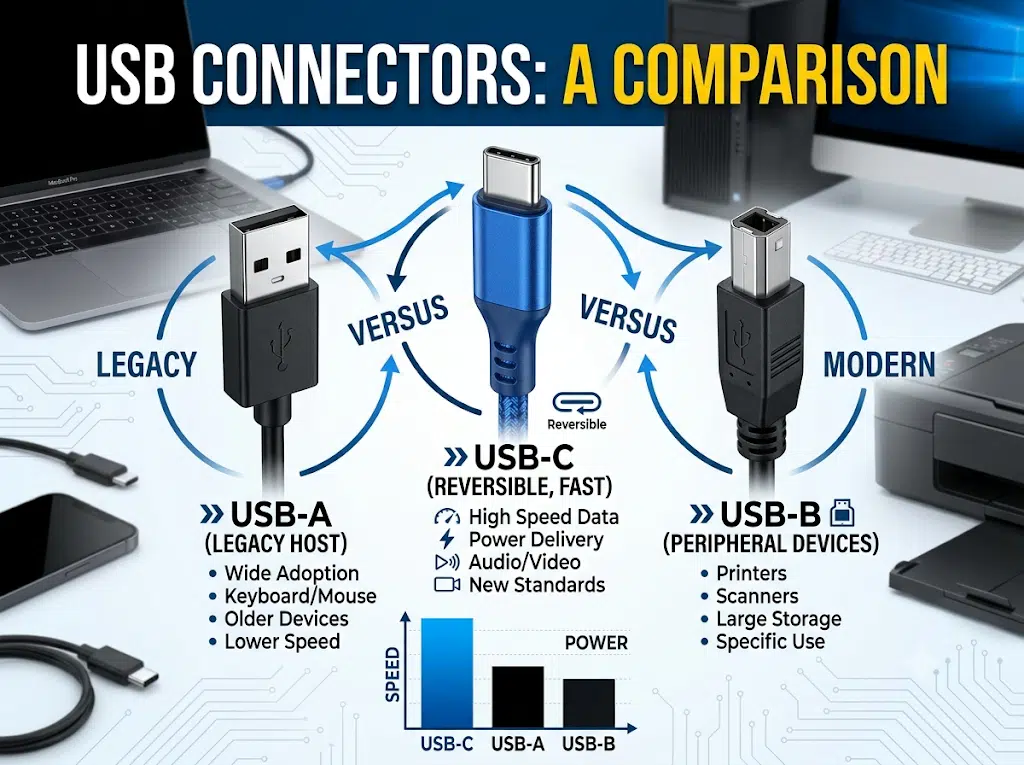
USB is the mainstream standard for data transmission and charging. USB-A, USB-B and USB-C connectors were developed for various devices and periods. Learning their distinctions enables you to pick proper cables and prevent compatibility problems.
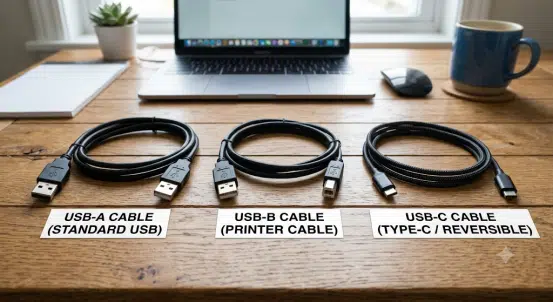
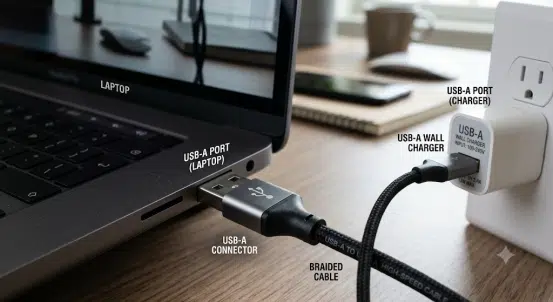
USB-A cable is the most classic USB cable. Its connector features a flat rectangular shape with a symmetrical plug design. This sturdy interface is widely adopted for traditional computers, chargers and peripheral devices.
| قياسي | Maximunm speed | Advantage | سيناريوهات التطبيق |
| USB 2.0 | 480Mbps | 1.Extremely common.
2.Durable and reliable.
3.Broad compatibility.
| ·Desktop computers, ·Laptops, ·TVs, ·Gaming consoles, ·Power adapters.
|
| USB 3.0 | 5Gbps | ||
| USB 3.2 | 5Gbps |
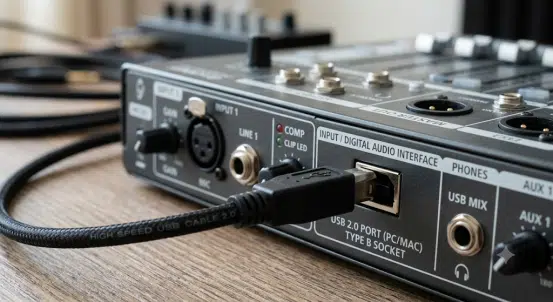
USB-B cable is mainly used for office and audio-visual devices. Its connector is square with slightly rounded corners and a one-way insertion design to prevent wrong connection. Built with solid structure, it delivers stable signal transmission, and is commonly matched with printers, scanners and professional audio equipment.
| قياسي | Maximunm speed | Advantage | سيناريوهات التطبيق |
| Standard USB-B | 480Mbps | 1.Secure connection.
2.Suitable for stationary equipment.
| ·Printers, ·Scanners, ·Audio interfaces, ·Industrial equipment, · External hard drive enclosures.
|
| Mini USB-B | 5Gbps | ||
| Micro USB-B | 5Gbps |
USB-C cable features a compact oval connector with a reversible plug design, allowing insertion from either side. Boasting sleek structure and superior performance, it supports high-speed data transfer, fast charging and video output. It is now widely used for smartphones, laptops and various modern electronic devices.
| قياسي | Maximunm speed | Advantage | سيناريوهات التطبيق |
| USB-C | Up to 80 Gbps | 1.One cable for many functions. 2.Future-proof solution. 3.Improved user experience. | ·Smartphones, ·Tablets, ·Laptops, ·Monitors ·Docking stations. |
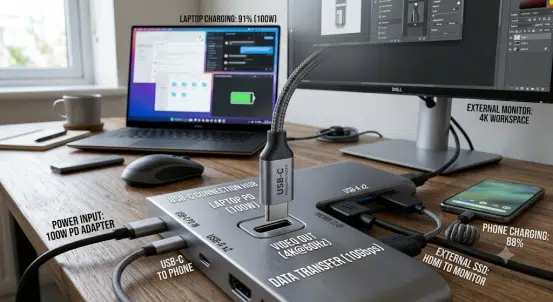
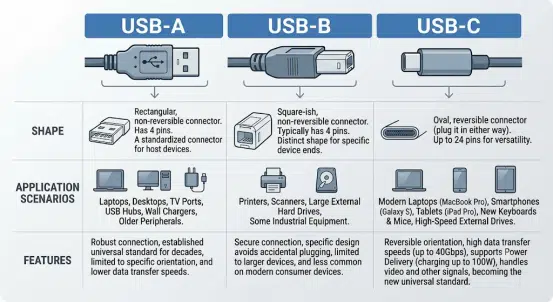
USB-A, USB-B and USB-C differ greatly in shape, design and application. The following comparison clearly shows their features, strengths and applicable scenarios for your reference.
| Feature | USB-A | USB-B | USB-C |
| Shape | Rectangular | Square-like | Oval |
| Reversible | لا يوجد | لا يوجد | Yse |
| Main Use | Host devices | Peripheral devices | Universal devices |
| Video Support | Limited | لا يوجد | نعم |
| Fast Charging | Limited | لا يوجد | نعم |
| Modern Adoption | Moderate | منخفضة | Very High |
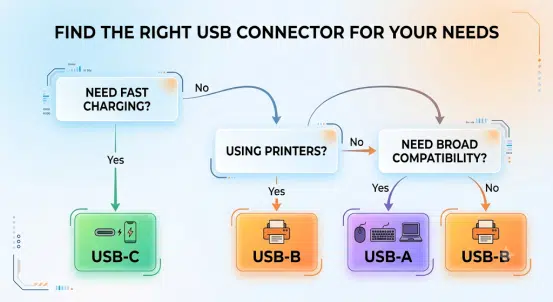
Choosing the right USB cable is easy: pick USB-A for older gear, USB-B for printers/industrial devices, and USB-C for fast charging, high-speed data, or multi-purpose use.
The whole industry is gradually shifting to USB-C. Many regions have rolled out regulations to push its unified standardization. Nowadays, more laptops and mobile gadgets adopt this interface, and high-power charging solutions based on USB-C are also booming. Even so, USB-A and USB-B will not disappear anytime soon. They still hold important positions in industrial equipment and older devices, and will keep serving these scenarios for a long time.
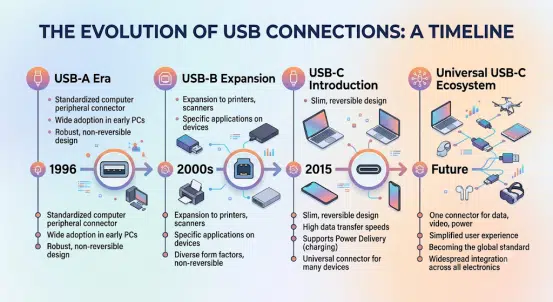
In short, USB-A offers excellent compatibility, USB-B is suitable for various specialized devices, and the versatile USB-C is leading the future of connectivity. While the first two still serve their purpose in specific scenarios, USB-C has become the mainstream standard. الأسلاك offers both standard and custom USB cables and can help bring your project to fruition quickly.
استمتع بعينة مجانية بقيمة حتى $100!
اكتشف خدماتنا المخصصة الآن. أدخل بريدك الإلكتروني وسنتواصل معك!
 English English
 Vietnamese
 Indonesian
 Arabic
 Spanish


