




A custom wire harness organizes conductors, terminals, connectors, protection, and identification around a defined electrical and mechanical interface. A reliable design begins with the approved drawing, connector part numbers, pinout, wire specifications, routing envelope, environment, and acceptance criteria. The harness itself should be evaluated as part of the finished equipment, not as a stand-alone guarantee of system compliance or performance.
WIRES supports custom harness projects from design review through controlled production. For an overview of how a harness differs from a cable assembly, see wire harness vs. cable assembly selection guidance.
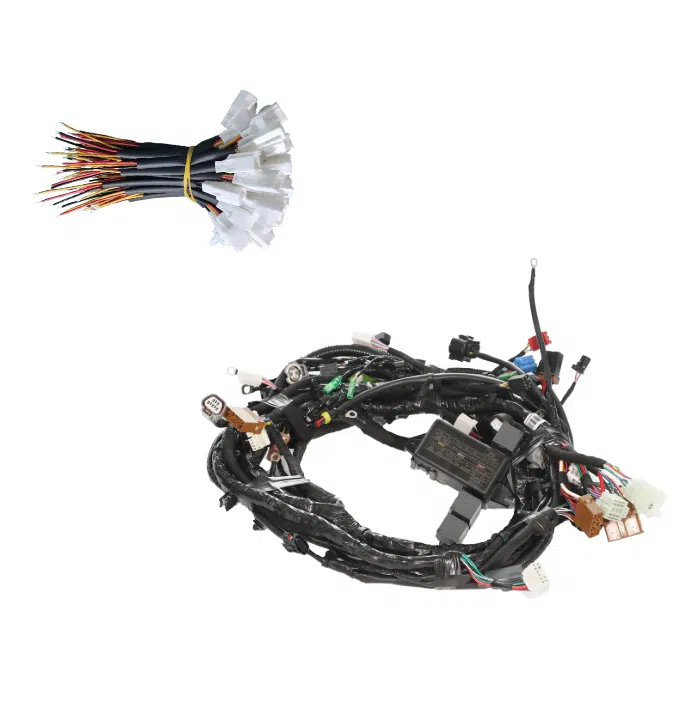
| Design element | Information to define | Why it matters |
|---|---|---|
| Electrical interface | Connector part number, cavity assignment, pinout, voltage/current role, signal type | Prevents incorrect mating, polarity, and circuit assignment. |
| Conductores | Wire style, size, stranding, insulation, color, length, and strip/crimp requirements | Connects the electrical design to the physical build and applicable specification. |
| Protection and routing | Branch points, sleeve, tape, conduit, grommets, clips, bend limits, and service access | Addresses abrasion, heat, movement, moisture, and installation constraints. |
| Identification | Labels, wire markers, connector labels, revision level, and packaging instructions | Supports assembly, service, and revision control. |
| Verification | Continuity, polarity, visual criteria, dimensional checks, and any customer-specified test method | Defines what must be verified and how results are accepted. |
Custom harnesses are used in industrial controls, automotive subsystems, consumer electronics, medical-device subsystems, instrumentation, heating controls, and powered equipment. Each application has different electrical, mechanical, environmental, regulatory, and documentation requirements. Industry references such as IPC/WHMA-A-620, IEC 60352-2, USCAR documents, or equipment-specific standards may inform an approved project, but a standard reference is not a claim that every WIRES assembly is certified or suitable for every market.
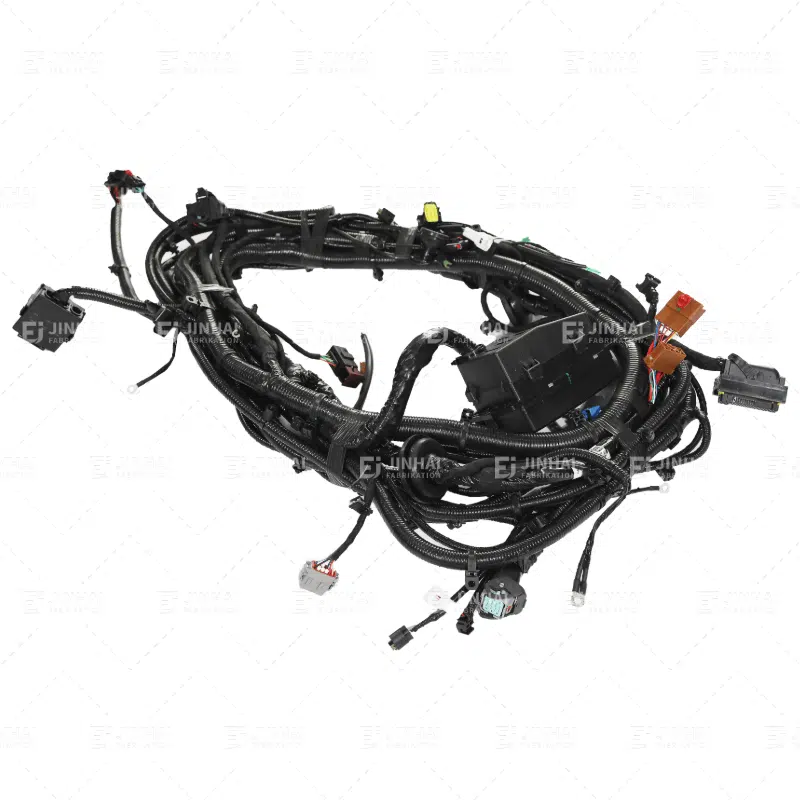

Provide the harness drawing or sample, bill of materials, connector and terminal part numbers, pinout, wire/cable requirements, branch dimensions, labels, routing notes, and revision control. If information is incomplete, a design-for-manufacturability review can identify open questions before tooling or production decisions.
Component selection should consider electrical load, mating interface, conductor range, temperature exposure, movement, fluids, vibration, sealing need, and required documentation. Do not substitute a connector, terminal, or wire merely because it appears physically similar. For terminal-selection context, review wire harness terminals and crimping guidance.
A controlled build normally covers cut length, stripping, terminal crimping, seal placement where specified, connector insertion, branch formation, protection, labeling, and final inspection. Tooling, crimp parameters, work instructions, and acceptance criteria should be tied to the approved component and project documentation.
Verification is project-specific. It may include visual workmanship checks, continuity and polarity checks, dimensional confirmation, connector lock and terminal-position checks, and any customer-defined electrical or environmental test. A request for a particular test should identify the method, revision, sample condition, limits, and reporting requirement.
For a process overview, visit WIRES process services y the customized process page.
Instrument harnesses often combine multiple low-voltage circuits, connectors, labels, and compact routing. Interface drawings and service access are usually as important as cable length. Confirm signal sensitivity, grounding scheme, and connector keying rather than assuming a generic harness layout is compatible.
Harnesses used around engines or vehicle zones require a design review of temperature, fluid exposure, movement, abrasion, retention, sealing, and vehicle-specific connector interfaces. OEM service information and the approved vehicle configuration are necessary for any replacement or integration project.
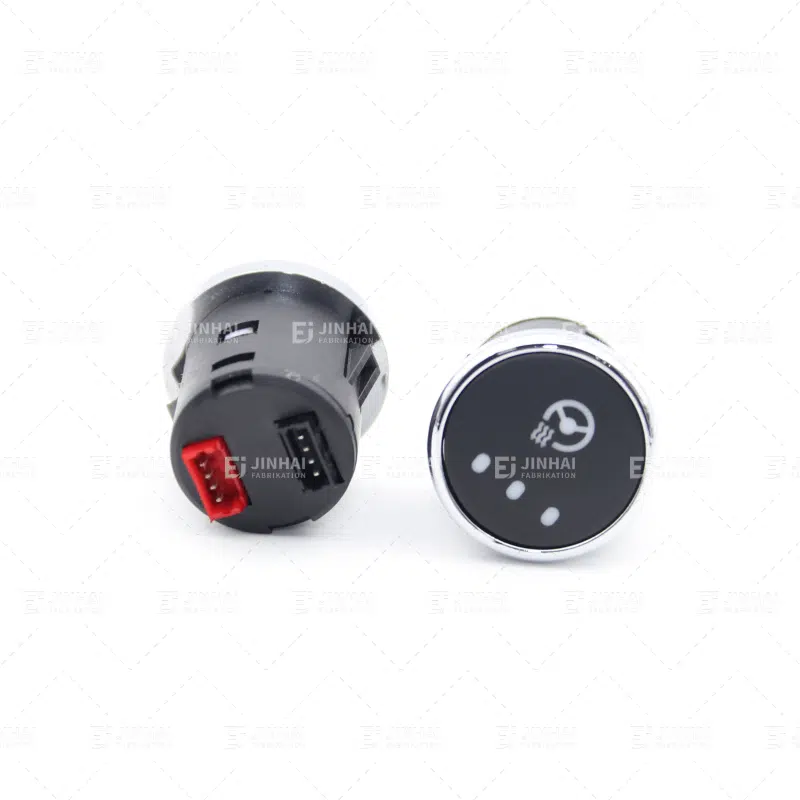
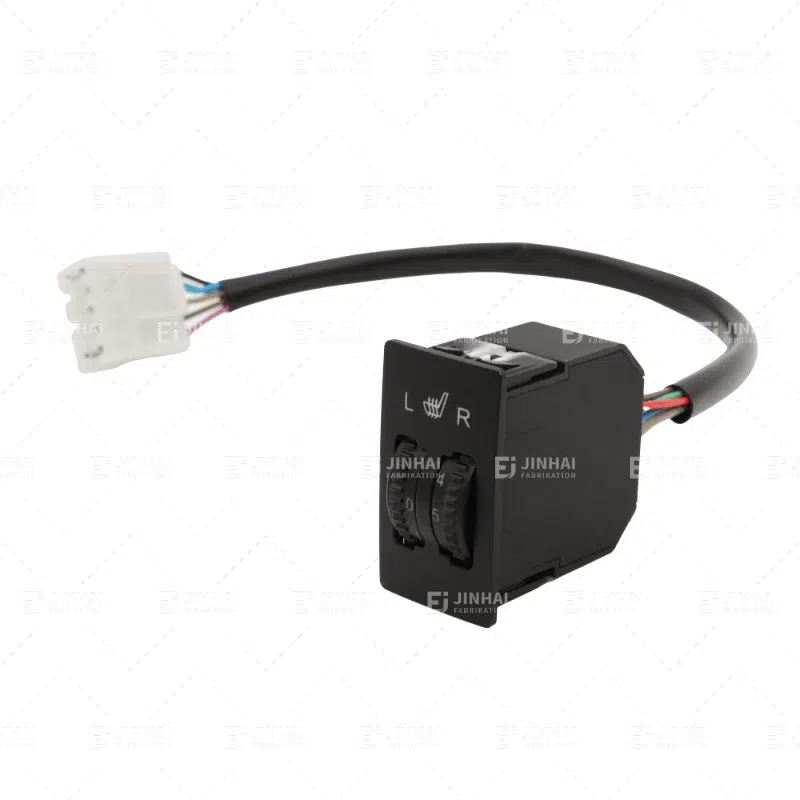
Switch and heating-control assemblies need verified circuit assignments, switch ratings, connector retention, strain relief, and equipment-level safety requirements. Product appearance does not establish the electrical specification.
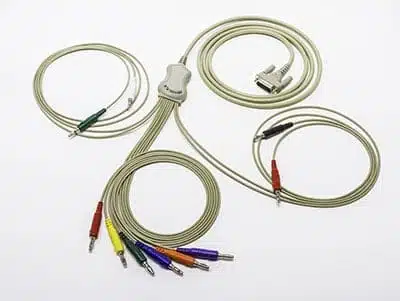
For medical or diagnostic equipment subsystems, define the device interface, cleaning or sterilization exposure if applicable, materials, routing, signal requirements, and customer-specified validation. A cable or harness alone cannot establish medical-device compliance, patient safety, EMC compliance, or diagnostic performance.
Compact vehicle harnesses benefit from clear branch dimensions, connector indexing, protection, retention, and service documentation. Vehicle model, configuration, circuit diagrams, and mating parts must be verified before a replacement or custom build is approved.
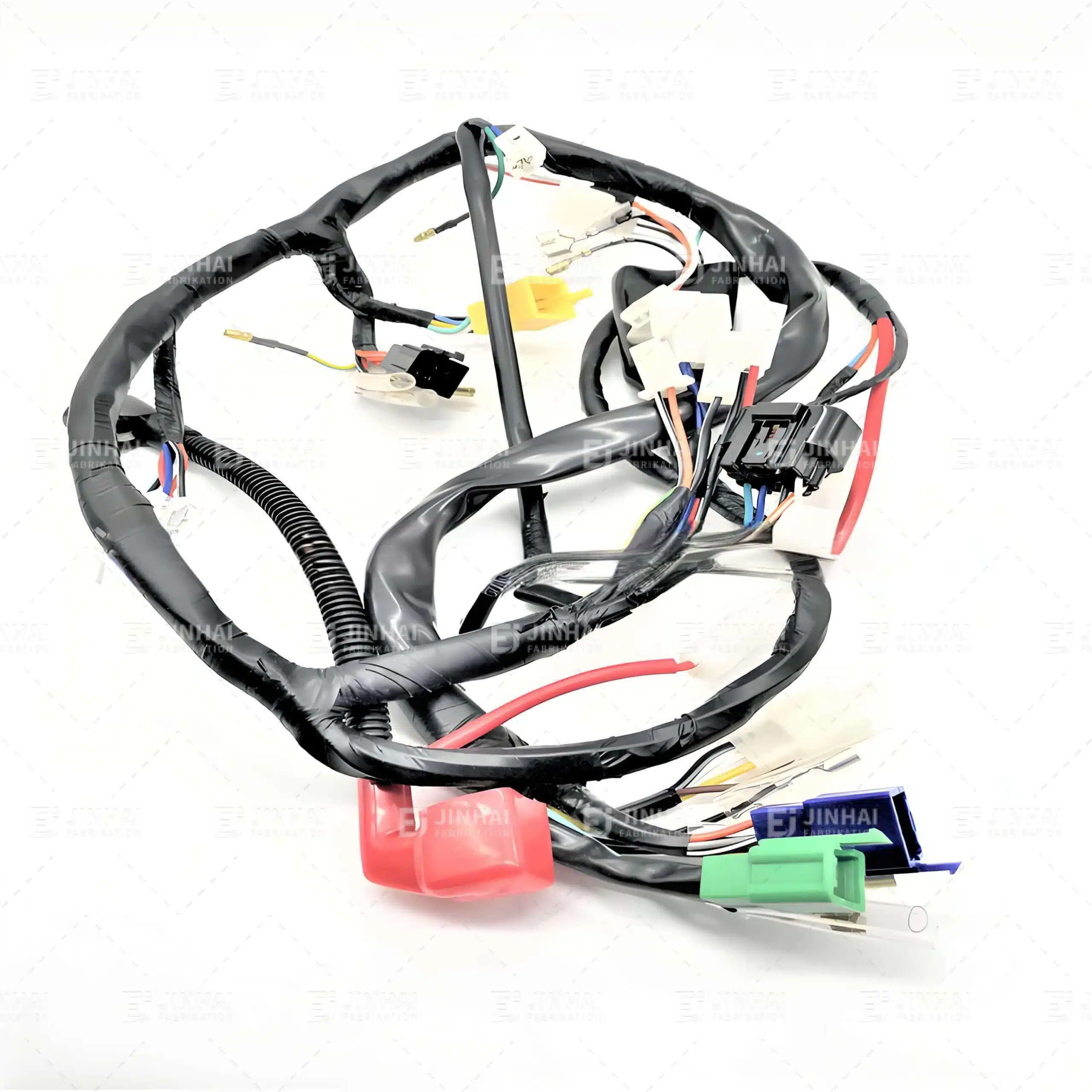
Cost, durability, shielding, and compatibility depend on the approved design and application. A documented harness reduces ambiguity across engineering, purchasing, assembly, and service. It also creates a basis for reviewing component changes, first articles, and acceptance results. General marketing statements cannot replace a drawing, datasheet, test method, or customer-approved specification.
Send the available drawing, sample, connector part numbers, pinout, wire and cable requirements, length or branch dimensions, operating environment, quantity forecast, and acceptance requirements. Where information is still being developed, identify the unknowns so they can be addressed during review.
A wire harness generally organizes multiple wires, branches, terminations, and protection for an equipment system. A cable assembly can be a simpler terminated cable or a more complex construction. The correct term depends on the design and function.
A drawing, BOM, pinout, connector and terminal part numbers, wire/cable requirements, dimensions, photos or sample, environment, quantity forecast, and acceptance criteria are useful inputs.
A sample can help identify physical construction, but electrical function, connector part numbers, wire requirements, revisions, and legal or intellectual-property permissions must be confirmed by the project owner.
The appropriate checks depend on the approved design. Define the required method, revision, conditions, limits, sampling, and documentation rather than relying on a universal test list.
Where the connector, cable, material, and environmental requirement support it, overmolding can provide strain relief and interface protection. The design still needs to be validated for the intended application.
Substitutions should be reviewed against the exact mating interface, terminal system, sealing, wire range, performance requirements, and approved project change-control process.
Use the form above or contact WIRES with your available project documentation and target application.
 English English
 Vietnamese
 Indonesian
 Arabic
 Spanish


