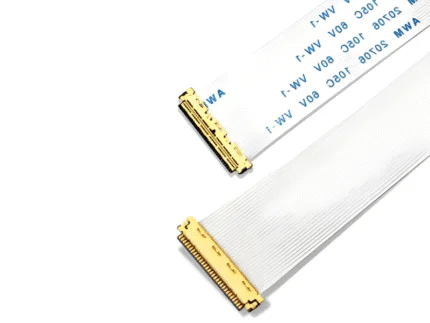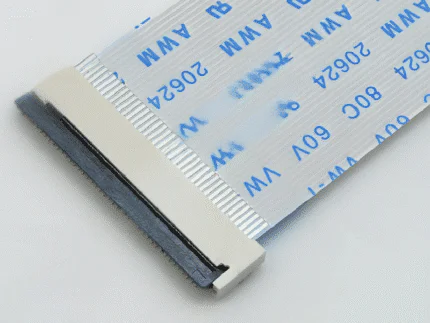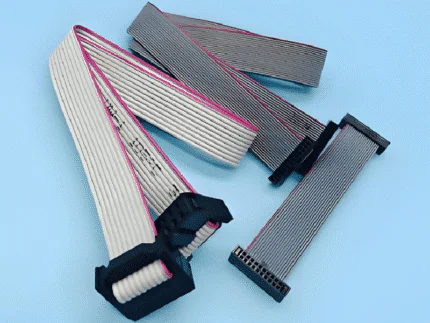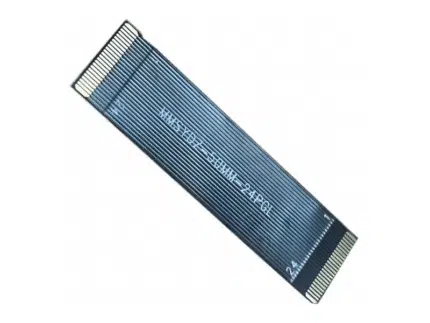


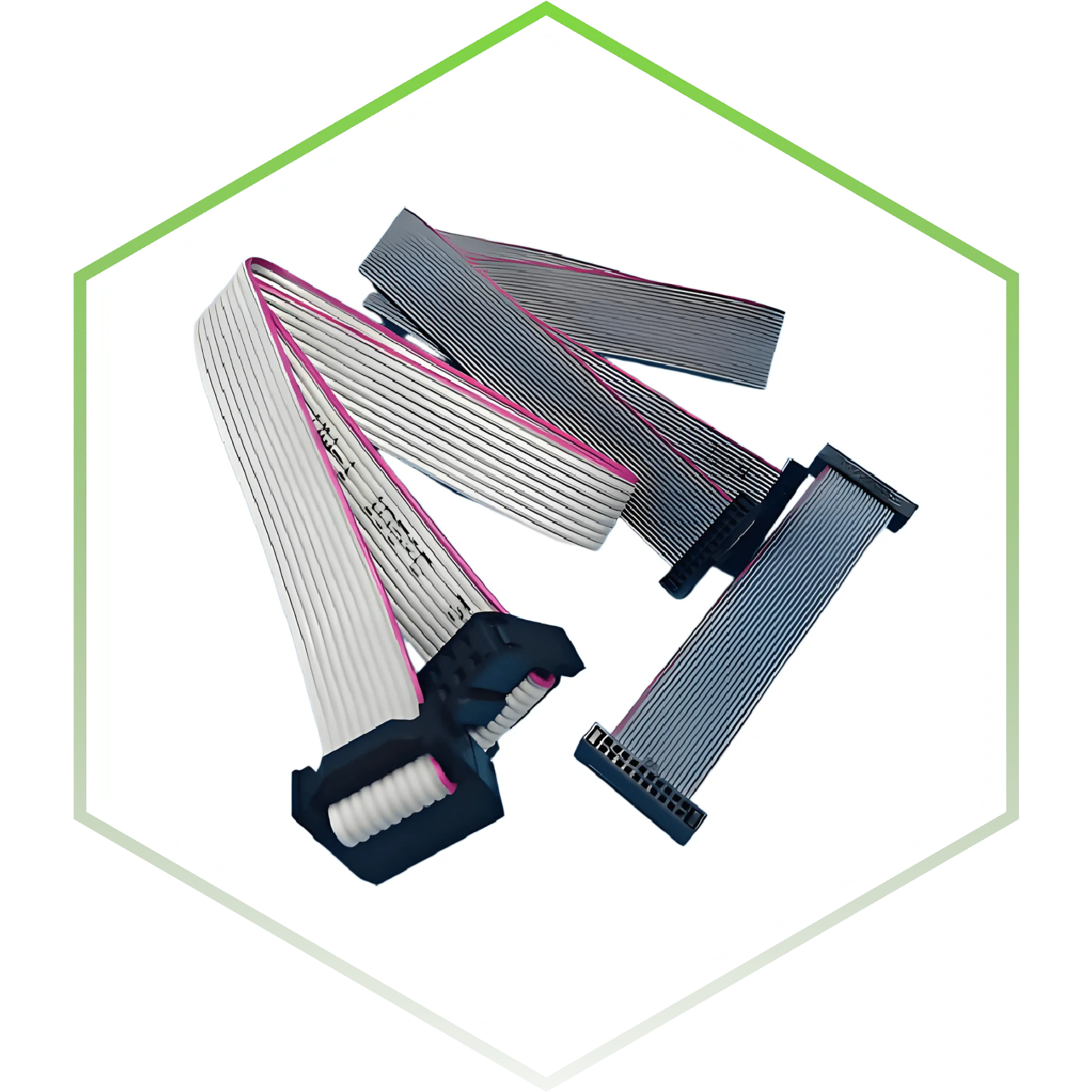
Flat Flexible Cable (FFC) connects device components with an ultra-thin profile and ZIF compatibility, making it ideal for tablets, laptops, smartphones, printers, and LCD displays. It can be routed and integrated into complete wiring harness systems for compact, high-density designs.
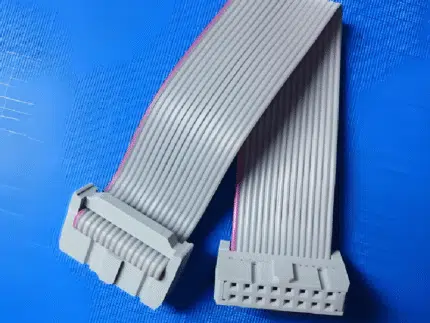
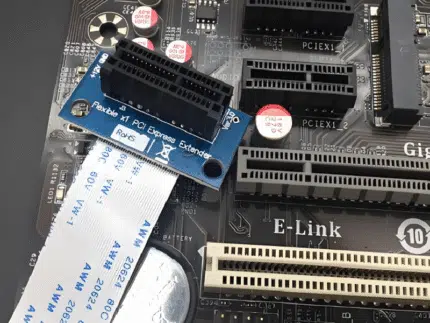
WIRES FFC Assemblies comply with international standards such as RoHS, REACH, and UL, ensuring safety, environmental compliance, and reliable performance.

UL-certified materials, compliant with USCAR-2 and MIL-PRF standards


| Length | Standard lengths(3, 6,9,and12inches);Custom lengths available upon request | |
|---|---|---|
| Conductor | Fold | Accordion-style folding: Expands and retracts as needed, ideal for adjustable or moving components Spiral folding: Spring-like structure that automatically returns after extension Z-fold: Zigzag folding to reduce vertical (Z-axis) space usage Custom angle folding: Multi-angle bending for flexible routing in complex layouts 3D forming: Thermally formed FFC with precise bend shaping and high positional accuracy |
| Asphalt | 0.5 mm pitch: 6–80 conductors for high-density connections 1.0 mm pitch: 4–50 conductors for greater mechanical strength and durability | |
| Electroplating | Flat tinned or gold-plated copper conductor | |
| Insulation | Manufactured with UL 20624-certified PET materials, ensuring reliability and compliance. High-temperature-resistant cable options are also available for demanding environments. | |
| Shielding/Grounding | Aluminum-laminated silver epoxy resin provides enhanced electromagnetic interference (EMI) shielding, and is primarily used for grounding applications in electronic systems. | |
| Stress relief | Integration - Overmolding | |
| Connector | Type | Cable-to-cable configuration; Cable-to-board connection |
| Pin Definition Diagram | One-on-one; Reverse | |
| Direction | Supports unidirectional output, as well as bidirectional input/output configurations for flexible connectivity. | |

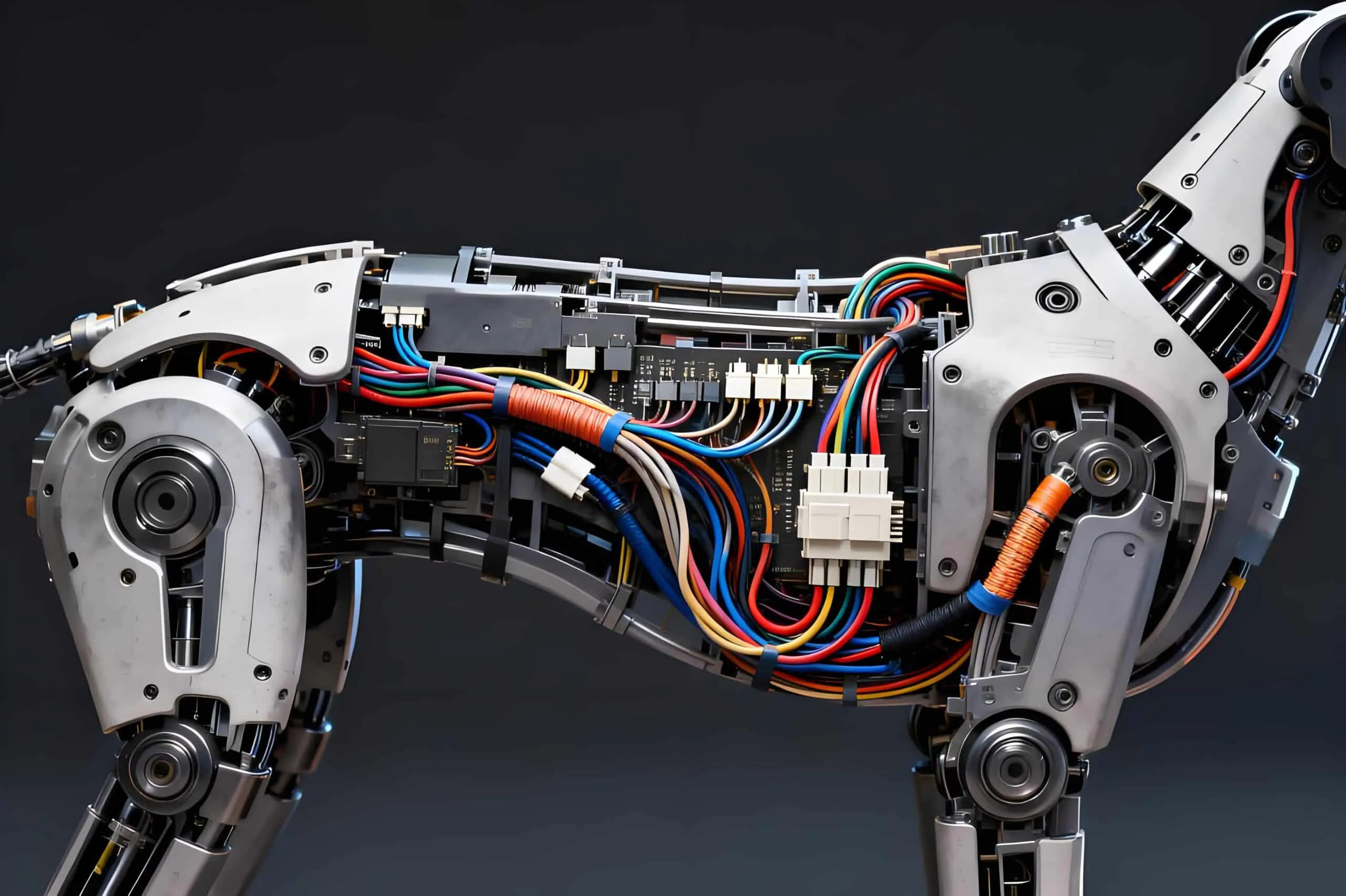

WIRES offers a wide range of custom FFC solutions to ensure all design, dimensional, and performance specifications meet your specific application requirements.

WIRES leverages advanced manufacturing processes to deliver orders with speed and precision. Our technical team supports a wide range of wire gauges, connectors, and termination methods, meeting diverse application requirements.

Wires uses high-quality materials and advanced manufacturing processes to produce every FFC assembly. We focus on consistent performance and reliability, ensuring each product meets strict quality standards while supporting stable long-term operation.
Compliant with IPC/WHMA-A-620 standards, ensuring reliable performance in every wire harness and cable assembly.





FFC (Flat Flexible Cable) typically features parallel, straight conductors with a simple 1-to-1 or 1-to-n pin configuration. It is mainly used for basic, cost-effective internal connections where flexibility requirements are moderate.
FPC (Flexible Printed Circuit), on the other hand, offers a more advanced design. It supports complex routing, multi-layer structures, and higher wiring density, allowing cross-connections and more flexible circuit layouts for compact and high-performance electronic applications.
FFC (Flat Flexible Cable) is available in a wide range of pitch specifications to meet different design requirements. Common options include 0.15 mm, 0.2 mm, 0.3 mm, 0.5 mm, and 1.0 mm, allowing flexible selection for various electronic and industrial applications.
The standard rated voltage of FFC (Flat Flexible Cable) is typically 50 V AC, making it suitable for low-voltage signal and internal electronic connections.
You can determine the spacing based on your specific application. For example, 0.3 mm to 0.5 mm is suitable for high-density, compact designs (such as digital cameras, tablets, and medical devices). Spacing of ≥1.0 mm is more suitable for industrial equipment (such as printers, scanners, and home appliances).
As a professional FFC component manufacturer, JinHai has delivered over 30,000 FFC assemblies for industrial equipment to date.
 English English
 Vietnamese
 Indonesian
 Arabic
 Spanish