


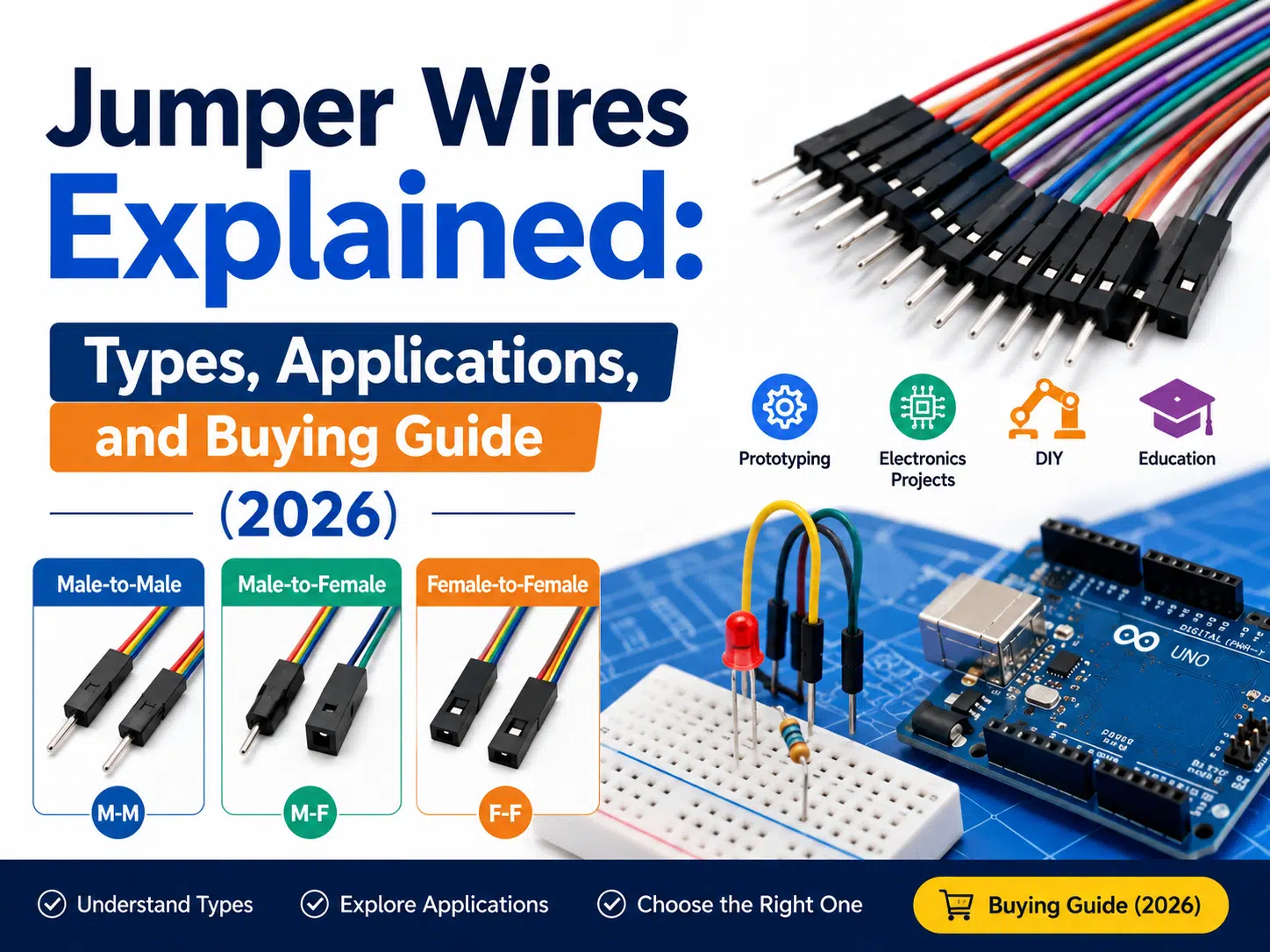
Jumper wires are staple electronic parts for Arduino builds, prototyping, PCB testing and electronics learning. Though simple, picking suitable ones boosts connection stability, cuts fault-check work and speeds up development.
This guide covers all core jumper wire knowledge: structure, classifications, uses, merits and selection tips for your projects.
Jumper wires are short electrical conductors used to create temporary connections between electronic components, breadboards, development boards, sensors, and testing equipment.
They are widely used in:
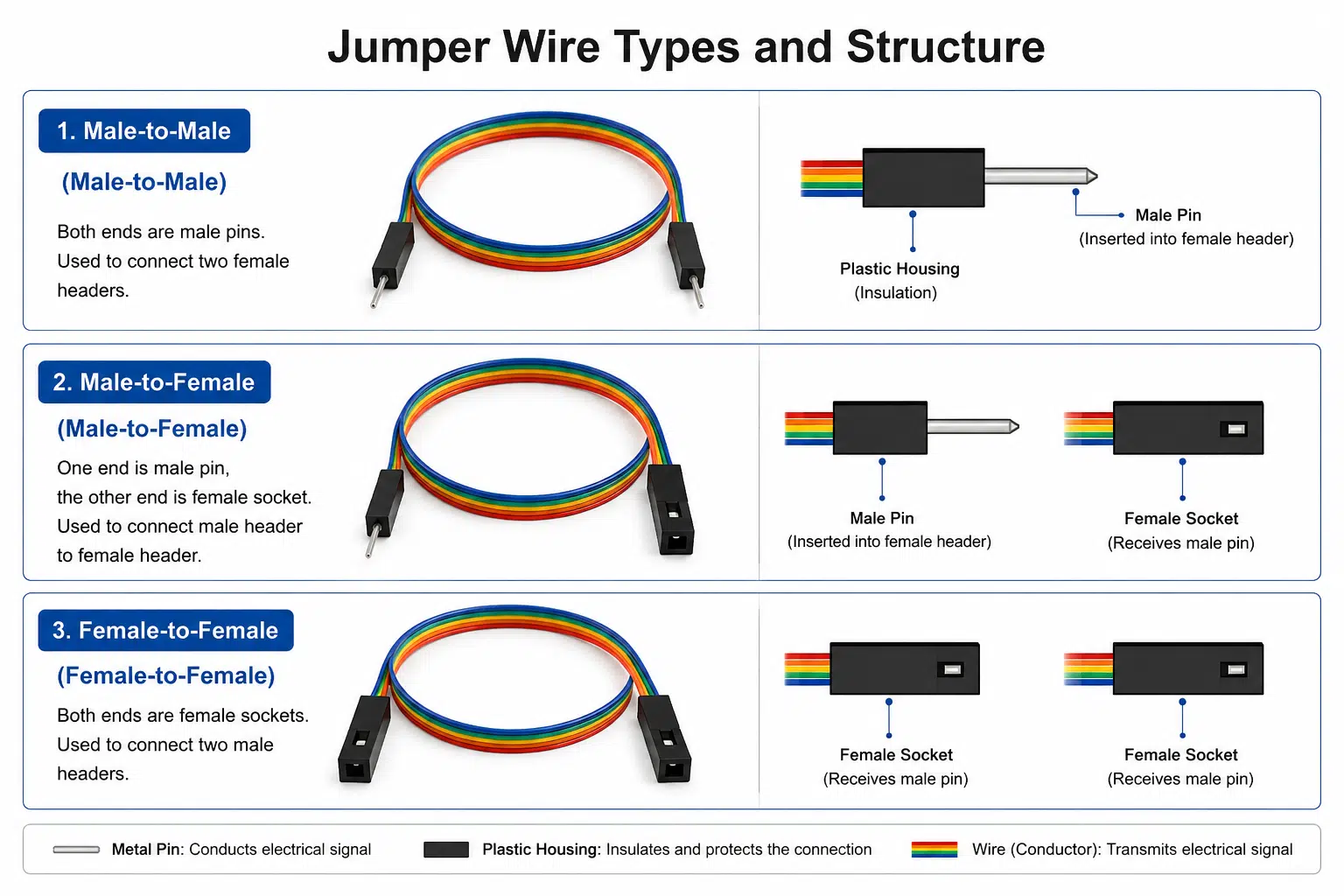
umper wires transfer electrical signals or power between two points. Their plug-and-play design allows users to quickly modify circuits without soldering.
Advantages include:
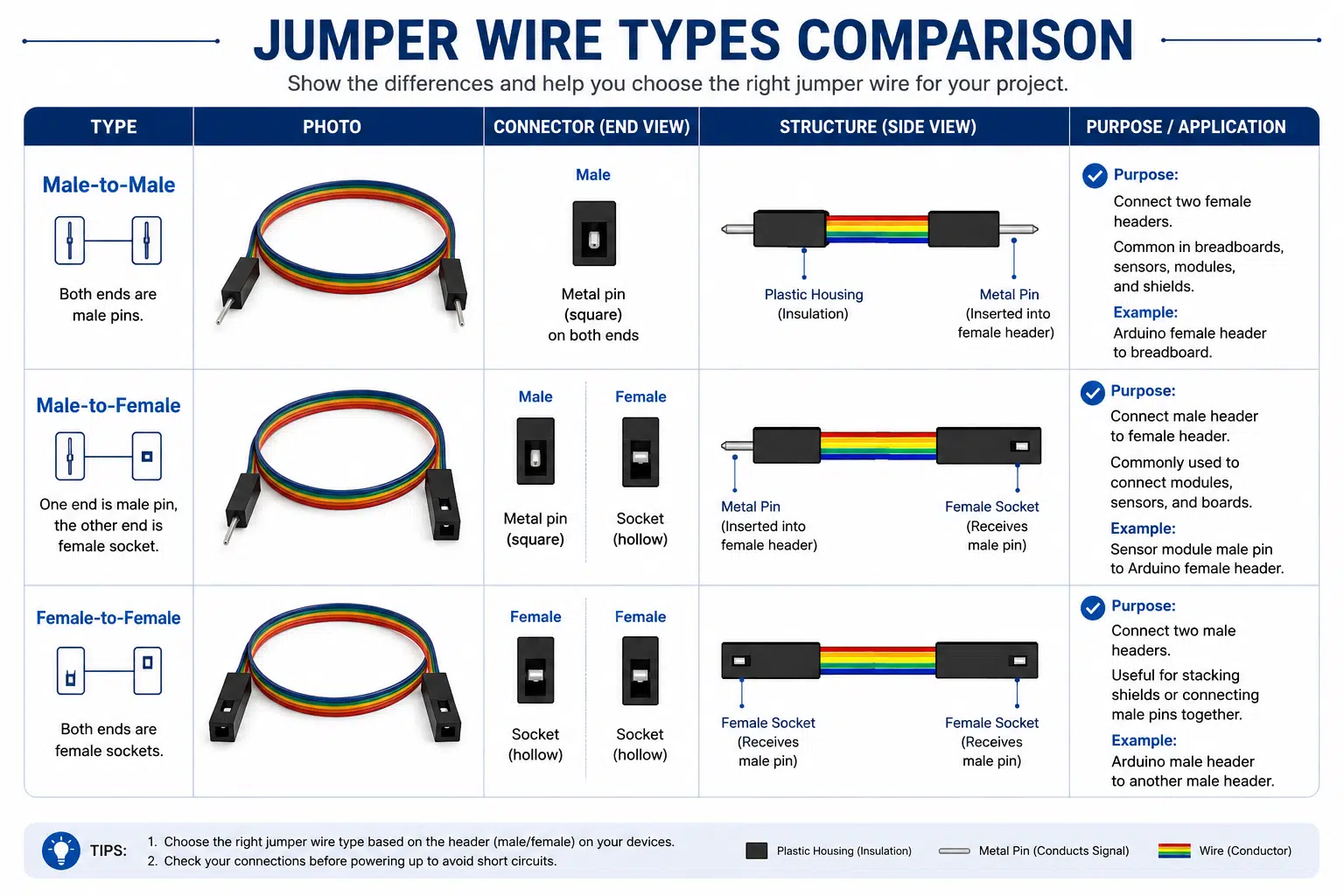
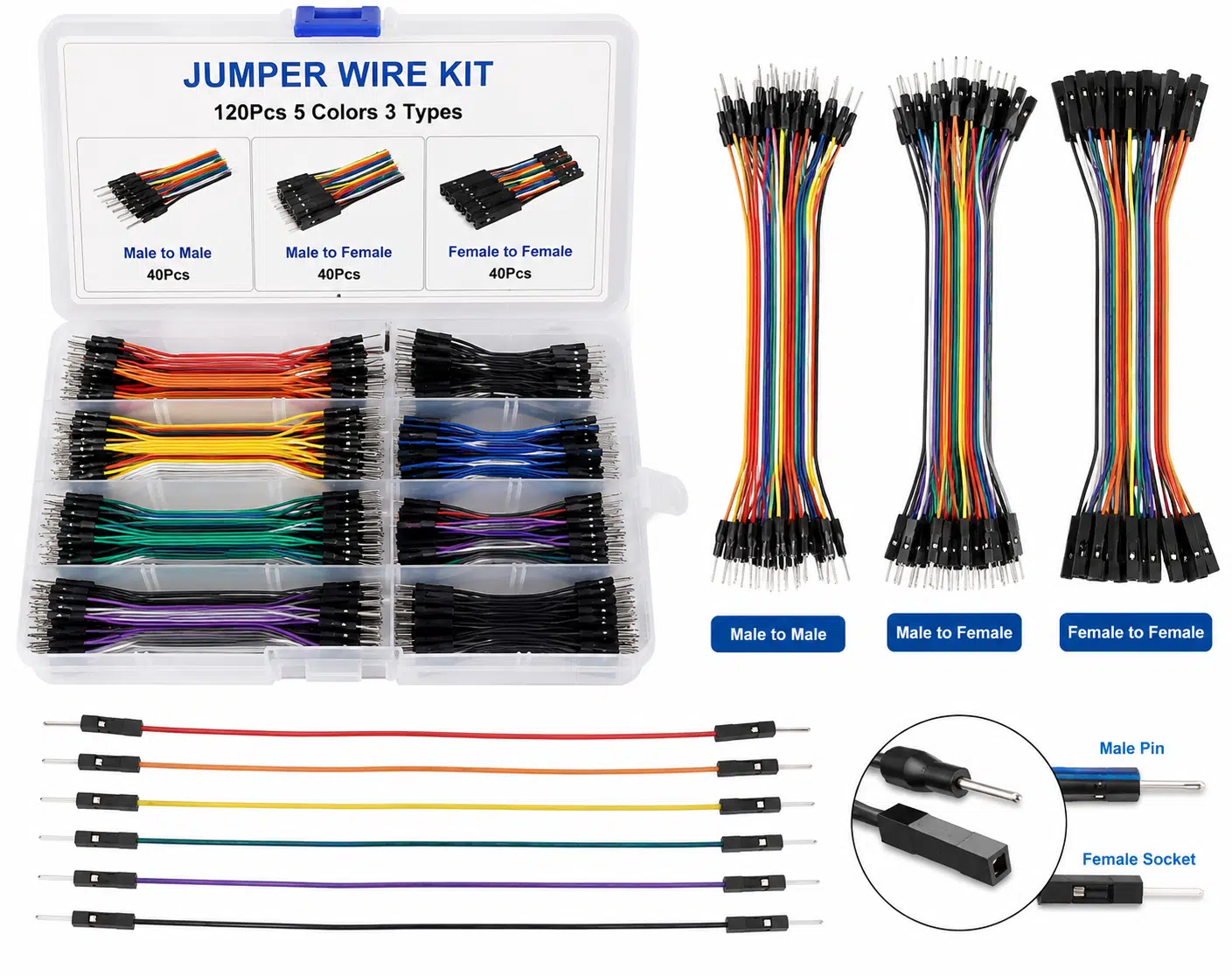
1.Mae-to-Male Jumper Wires
Most commonly used for breadboard-to-breadboard connections and Arduino development.
2.Male-to-Female Jumper Wires
Ideal for connecting modules, sensors, and development boards.
3.Female-to-Female Jumper Wires
Typically used between pin headers and electronic modules.
Jumper wires are essential for:
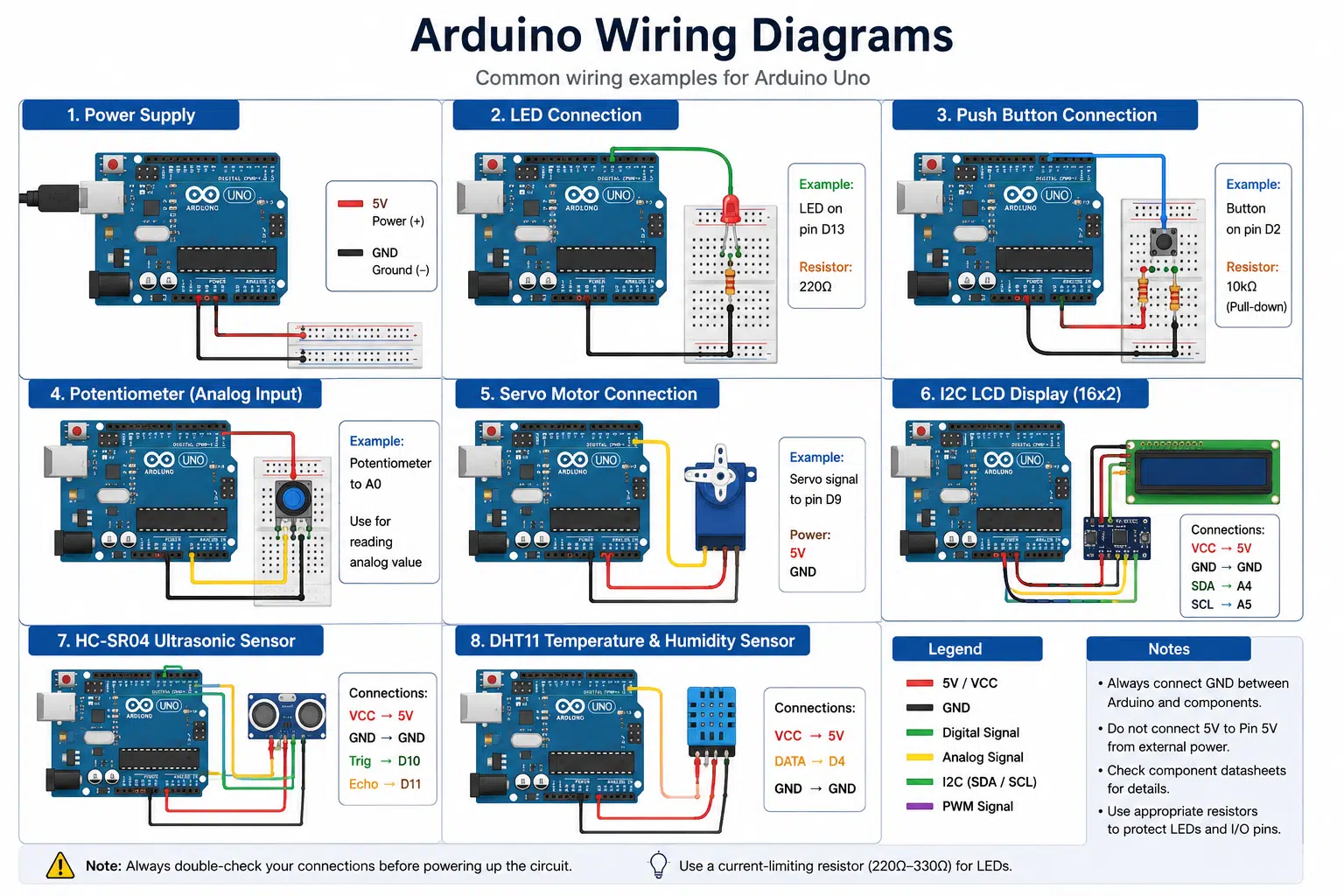
Used for GPIO connections, displays, cameras, and smart home systems.
Engineers use jumper wires to verify circuit designs before PCB production.
Widely used in schools and laboratories for electronics education.
Jumper Wires vs Soldered Connections
| Feature | Jumper Wires | Soldered Connections |
| Installation | Fast | Permanent |
| Reusability | High | None |
| Cost | Low | Medium |
| Flexibility | Excellent | Limited |
Common options:
Recommended:
Preferred materials:
Look for:
1.What are jumper wires used for?
Used for connecting electronic components during testing and prototyping.
2.Can jumper wires carry power?
Yes. They can transmit low-voltage power and signals.
3.Which jumper wires are best for Arduino?
Male-to-Male and Male-to-Female jumper wires are the most commonly used.
WIRES jumper cables are essential for electronic prototyping, teaching and R&D. For Arduino builds, circuit testing and new product development, our premium jumper wires deliver stable connections, higher efficiency and smoother project progress — order WIRES now to streamline your work!
 English English
 Vietnamese
 Indonesian
 Arabic
 Spanish


