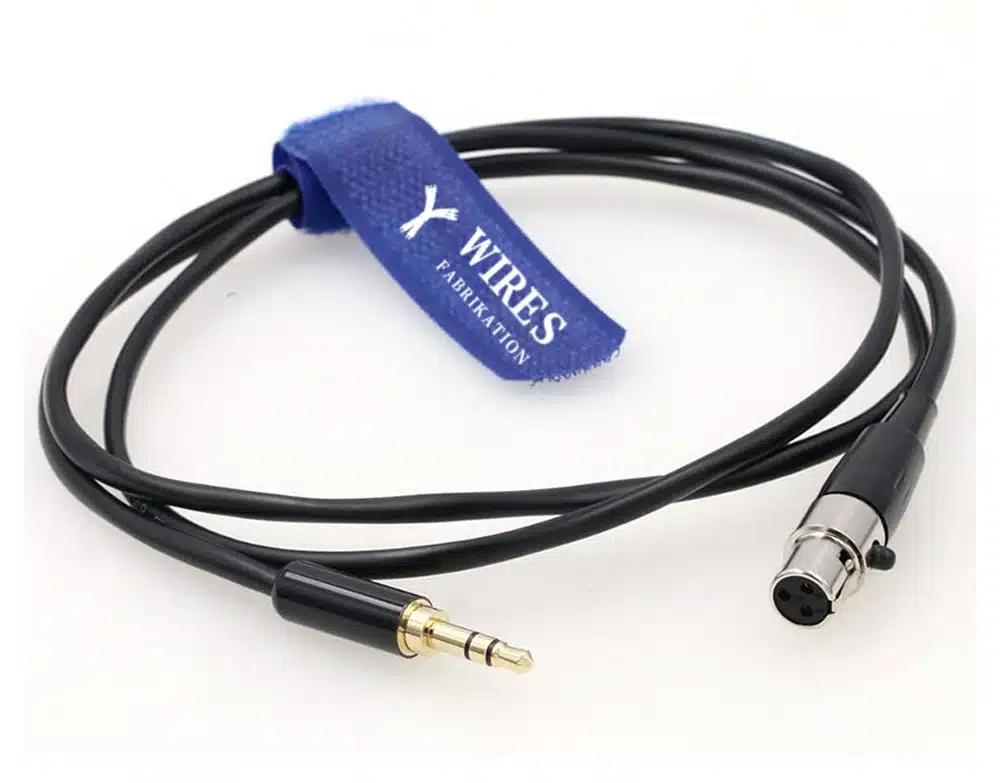


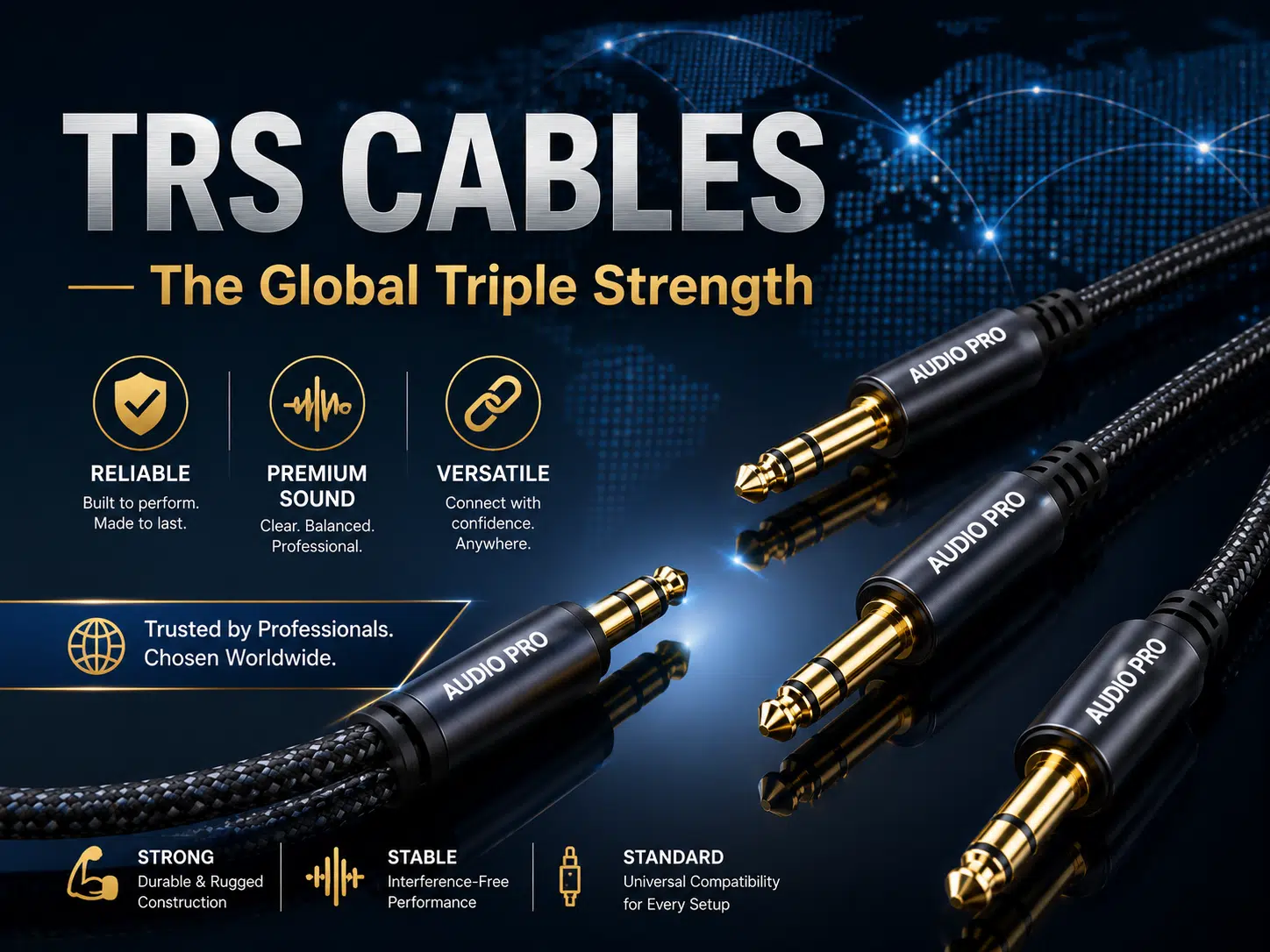
Audio cables face heavy wear and external interference. Durability and dual shielding are essential. TRS cable quality varies widely — verify details prior to buying.
Short for Tip, Ring and Sleeve, TRS cables carry analog audio. They support both stereo and balanced mono signals. Its three conductors counteract electromagnetic noise during transmission, delivering pure sound, making TRS an industry standard.
These cables accommodate various plug sizes, including 3.5mm plugs, quarter-inch plugs, and 2.5mm plugs.
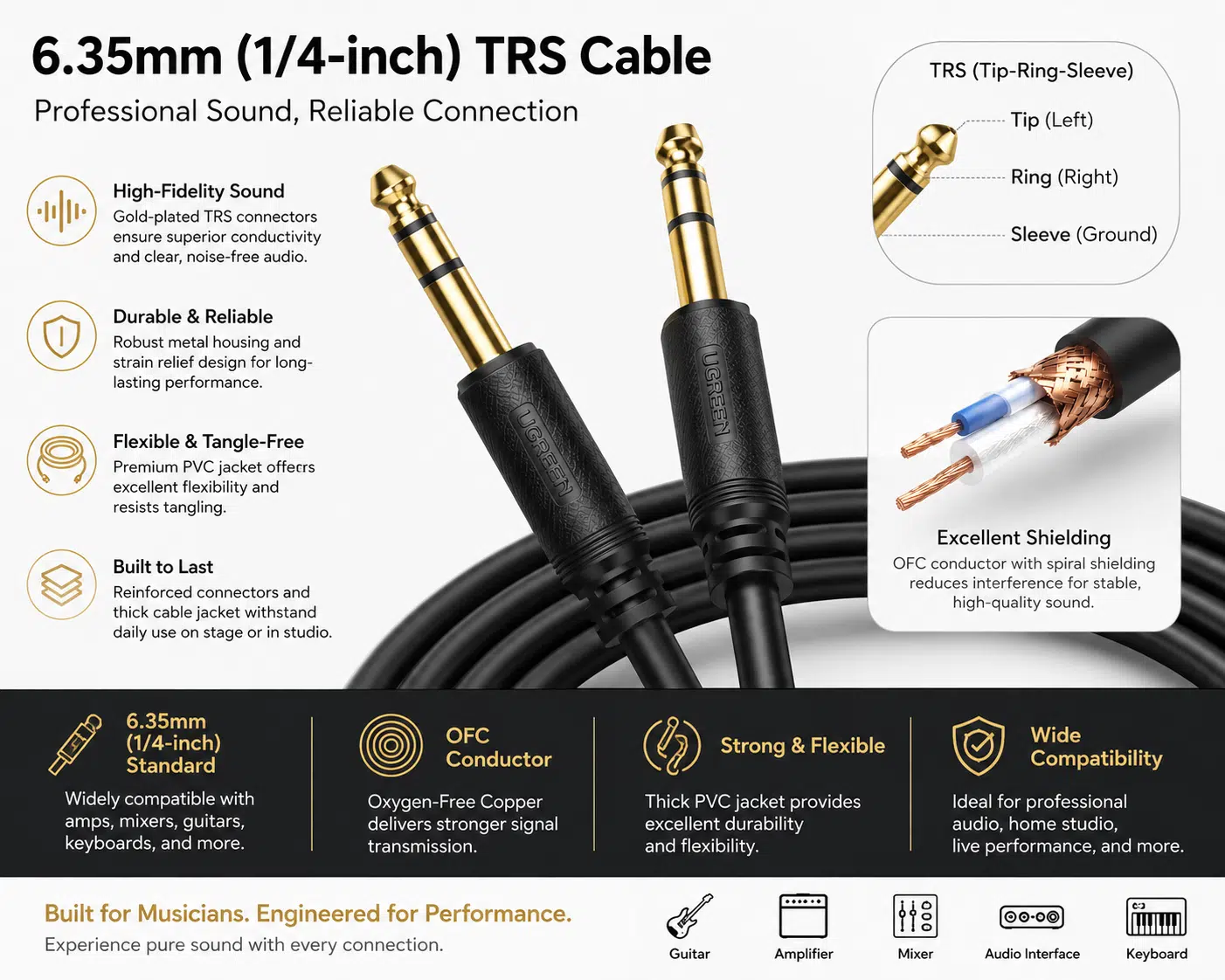
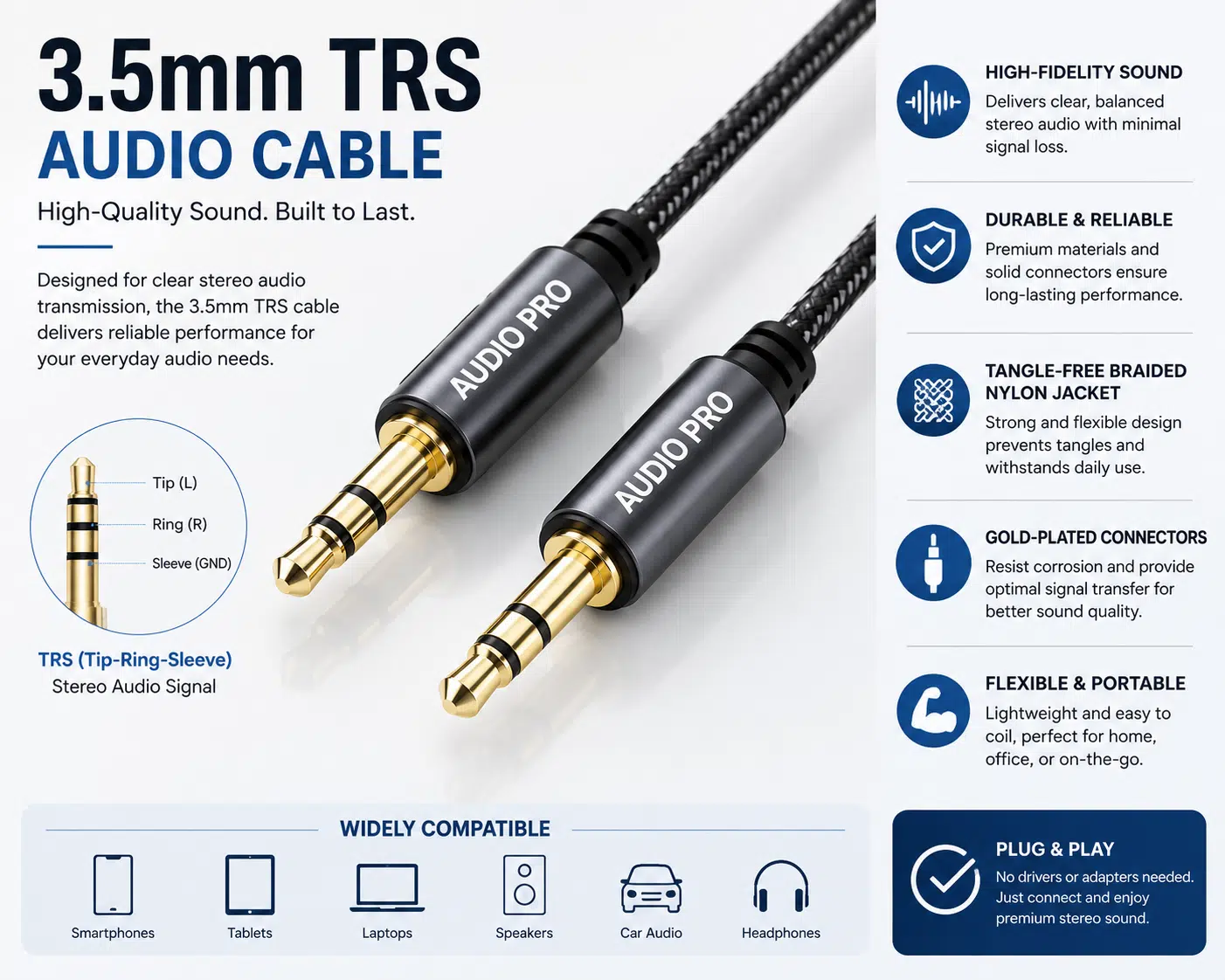
While TRS and TS cables look almost the same, they differ greatly in internal structure and functional design.
The difference in the number of conductors creates varied signal transmission performance.
Signal Type: TRS cables support the transmission of both mono and stereo audio signals. With one fewer conductor, TS cables are only capable of carrying mono signals.
Interference Resistance: TRS cables adopt balanced transmission to resist electromagnetic interference and maintain stable signals over long runs. TS cables are only for short-distance use, like connecting electric guitars.
TS cables can replace TRS cables in certain cases, yet signals will weaken and become more prone to noise. Using TRS cables for TS applications also causes unstable transmission.
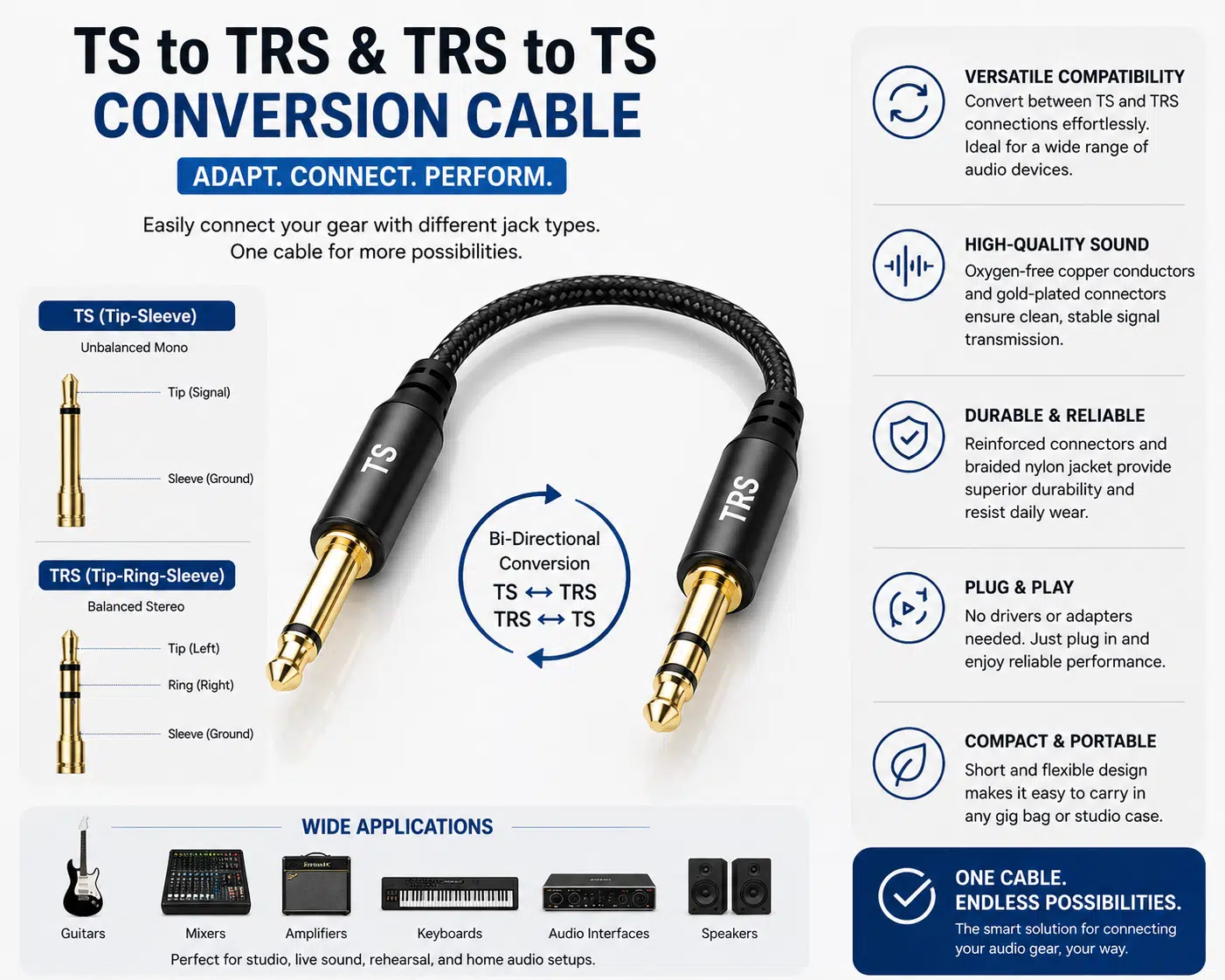
Similar looks and applications often lead to confusion between TRS and TS cables.
For one thing, their plugs have the same diameter and are compatible with the same jacks. Besides, the outer casing of both acts as the signal ground. Furthermore, both are applied for audio signal transmission.
As another popular balanced cable for professional audio, XLR works alongside and rivals TRS cables.
Physical Structure: Round 3-pin XLR connectors have locks to stop accidental disconnection, perfect for reliable use on stage and outdoors. TRS connectors have no locks but allow quicker plugging and unplugging.
Durability and Professionalism: XLR connectors are deemed more professional and are standard for condenser microphones. TRS cables, valued for flexibility, often link audio interfaces and monitor speakers.
Functional Versatility: XLR cables mainly carry mono signals. More versatile, TRS cables support mono, stereo signals like headphones, and work as insert cables for two-way signal transmission.
To sum up, XLR cables ensure stable connections, while TRS cables excel for versatility and ease of use across devices.
TRS cables are widely available and compatible with most devices. The key is reliable purchasing, and WIRES is your trustworthy option.
Cable Model | Advantages | Application Scenarios |
| TRS to XLR Cable | Supports balanced signal transmission, strong anti-interference, stable long-distance signal output | Connect audio mixers, microphones, power amplifiers and professional stage audio equipment |
| TRS Cables for Guitars | Low signal loss, durable structure, clear sound reproduction, flexible for movement | Electric guitars, basses, musical instrument connection in rehearsal rooms and live performances |
| TRS and TS Cables | Diversified specifications, wide compatibility, cost-effective, easy to plug and unplug | General audio connection for speakers, headphones, amplifiers and daily audio devices |
| Right-Angle TRS Cables | Space-saving design, avoids cable bending damage, neat wiring | Compact equipment, desktop audio gear, rack-mounted devices and narrow installation spaces |
| TRS to RCA Cable | Seamless signal conversion, universal compatibility, stable audio transmission | Connect professional audio devices to home speakers, AV equipment and consumer audio products |
| TRS to TRS Cable | High versatility, simple structure, reliable connection, fast assembly | Audio interface, monitor speakers, headphones and inter-device audio bridging |
| TRS Jumper Cables | Short length, compact layout, low signal attenuation, tidy wiring | Audio patch bays, effect pedals, rack equipment and studio internal line connection |
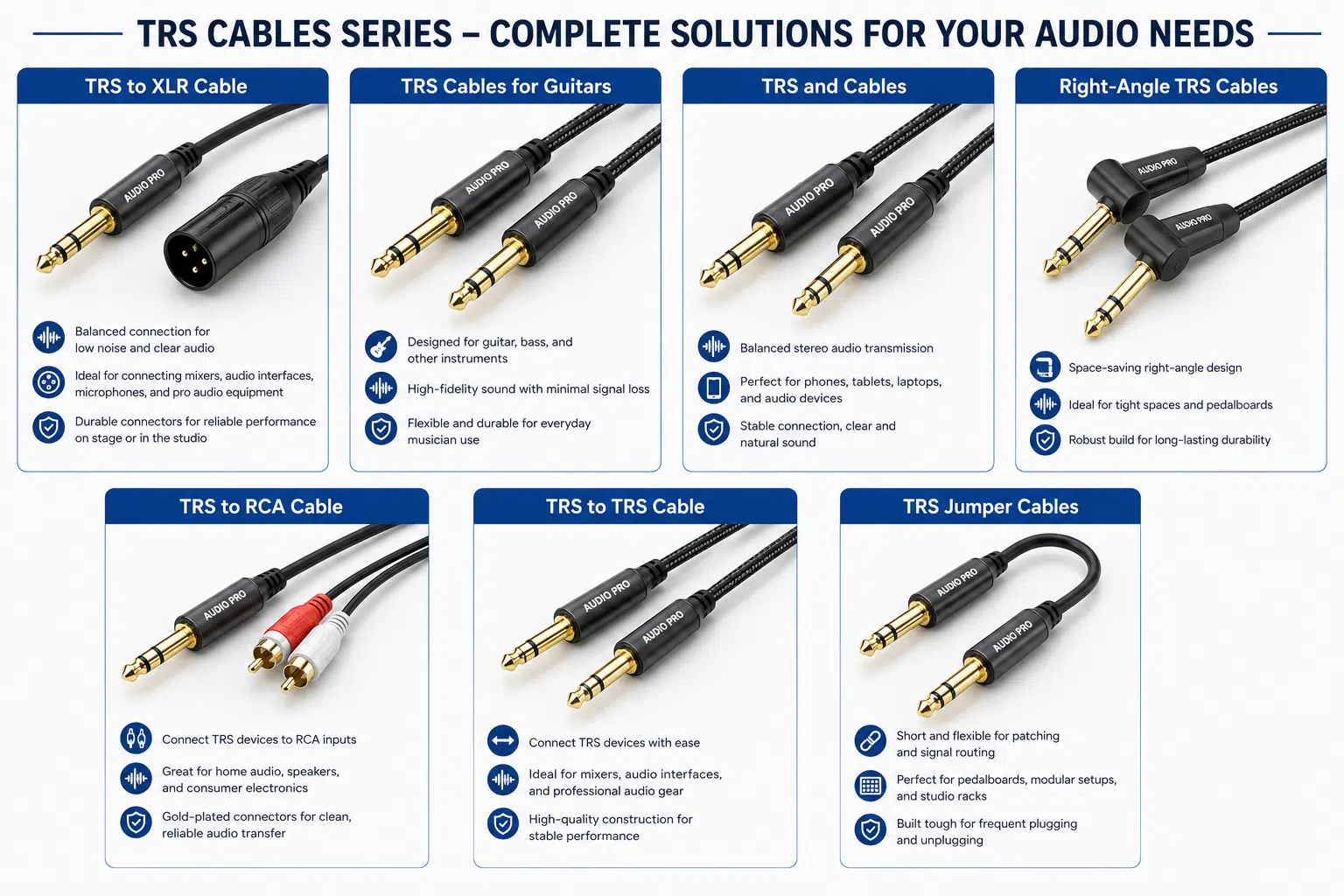
Many mix up TRS and TS cables, yet TRS delivers more stable audio. Cables impact sound quality greatly, so choosing proper TRS cables is key to good recording. WIRES offers professional guidance for your selection.
Enjoy a free sample worth up to $100!
Explore our custom services now. Leave your email, and we'll get intouch!
 English English
 Vietnamese
 Indonesian
 Arabic
 Spanish