



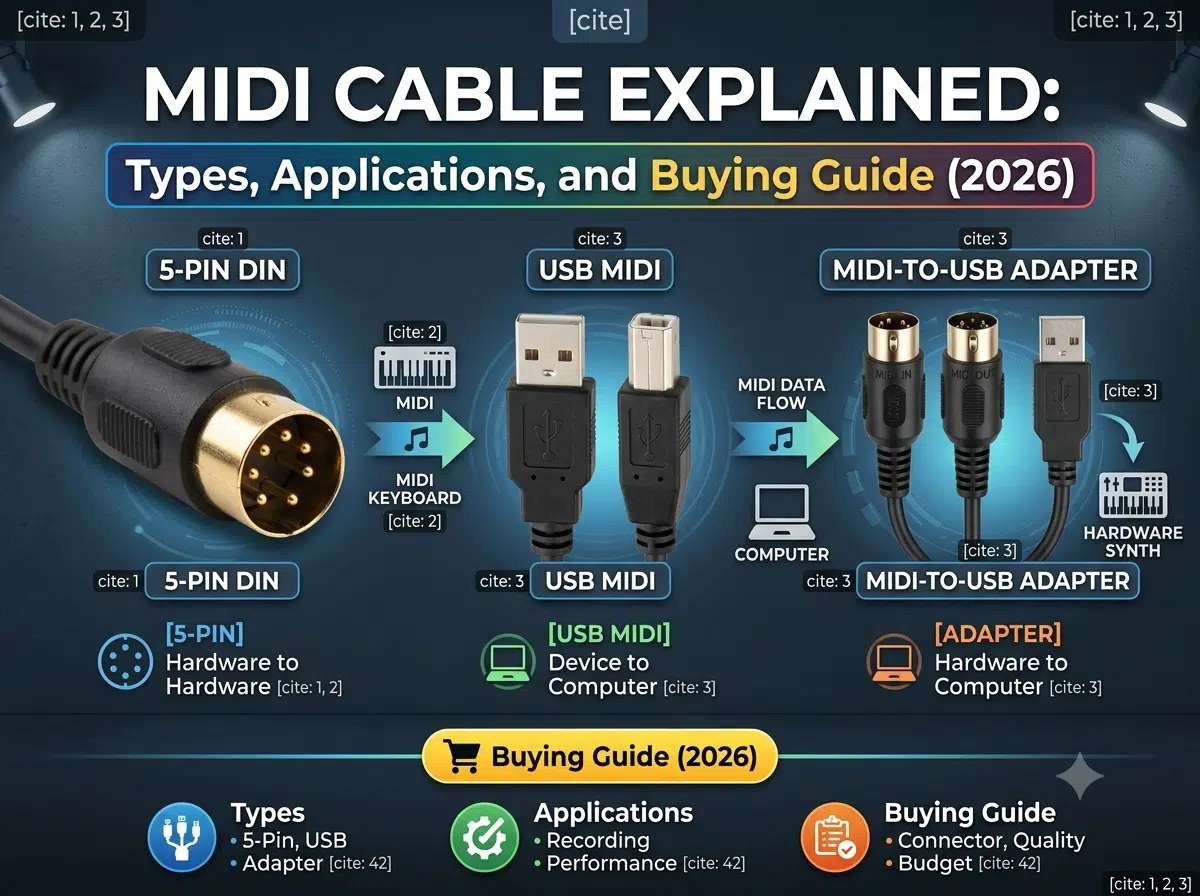
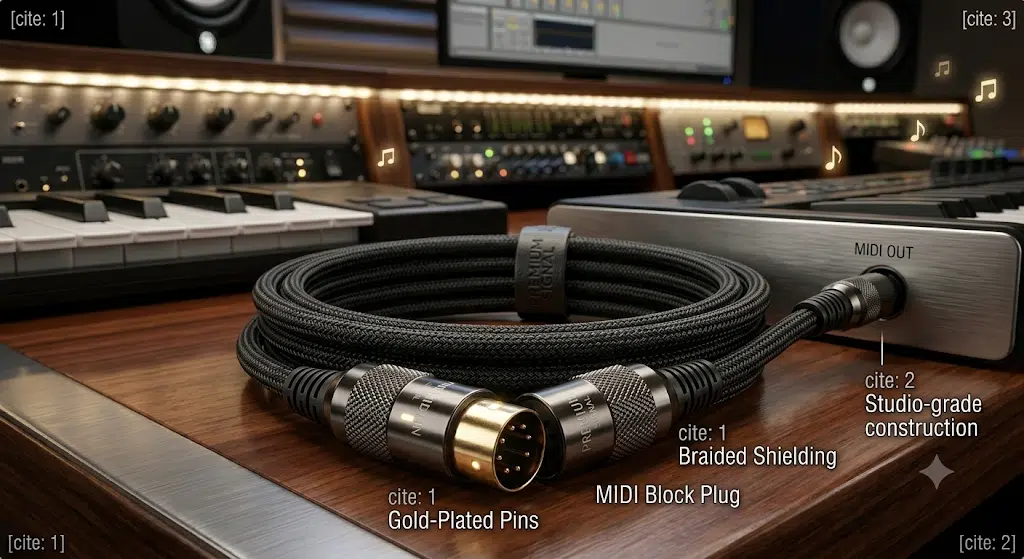
MIDI cables connect music gear for studio production, live shows and home recording. Musicians tend to prioritize keyboards, synths and audio interfaces yet overlook these vital cables that guarantee stable device signal transmission.
In this guide, you’ll learn:
- What a MIDI cable is
- How MIDI works
- Different MIDI cable types
- Common applications
- How to choose the best MIDI cable
By the end, you’ll know exactly which MIDI cable is right for your setup.
A MIDI cable is a specialized communication cable used to transmit Musical Instrument Digital Interface (MIDI) data between electronic musical instruments, computers, synthesizers, drum machines, controllers, and audio equipment.
Unlike audio cables, MIDI cables do not carry sound signals. Instead, they transmit digital instructions such as:
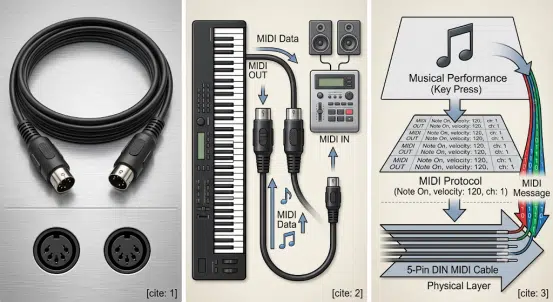
A MIDI cable transfers digital performance data from one device to another.
Example:
Keyboard → MIDI Cable → Synthesizer
When a key is pressed, the keyboard sends MIDI commands through the cable. The synthesizer receives these commands and generates sound.
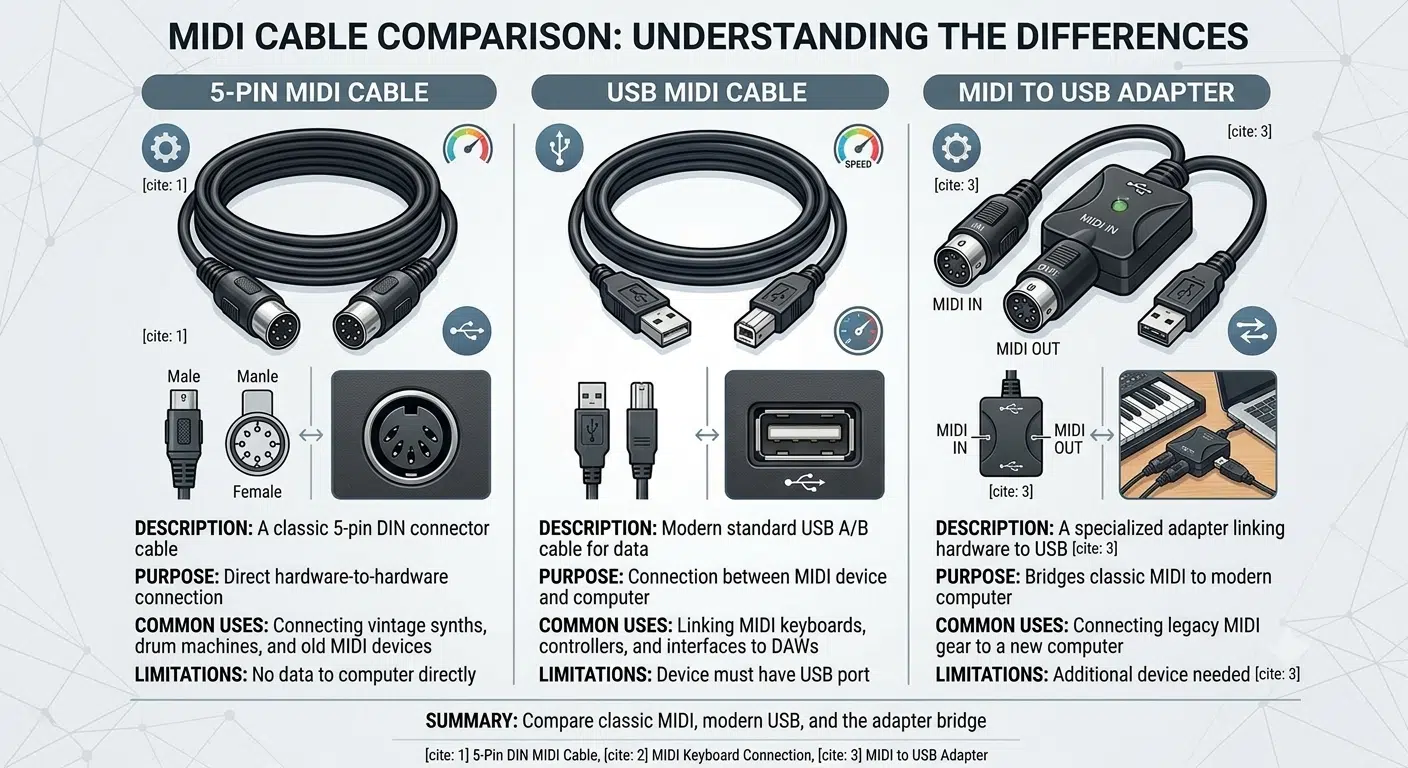
1.Traditional 5-Pin MIDI Cable
Applications:
Advantages:
2.USB MIDI Cable
Connects MIDI devices directly to computers.
Advantages:
3.MIDI to USB Interface Cable
Perfect for connecting older MIDI devices to modern computers.
| Feature | MIDI Cable | Audio Cable |
| Carries Sound | No | Yes |
| Carries Data | Yes | No |
| Device Control | Yes | No |
| Signal Type | Digital | Analog/Digital |
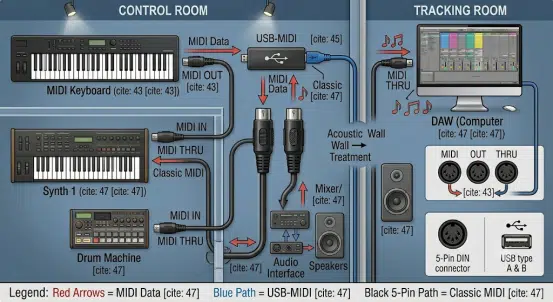
Recommended:
Look for:
Choose:
1.Does a MIDI cable carry audio?
No. MIDI cables transmit control data only.
2.Can I use a MIDI cable with a computer?
Yes, using a USB MIDI interface.
3.What is the standard MIDI connector?
5-Pin DIN connector.
WIRES MIDI cables are essential for music production, live shows and studio setups. Our premium cables deliver steady signal transmission between all your music gear, letting you focus on creation without technical glitches. Shop WIRES MIDI cables now for worry-free audio workflows!
 English English
 Vietnamese
 Indonesian
 Arabic
 Spanish


