

Modern farm machinery like tractors and harvesters uses many electronic parts, with wiring harnesses carrying power and signals. This guide covers harness traits, usage, selection and pitfalls for manufacturers, technicians and farmers.
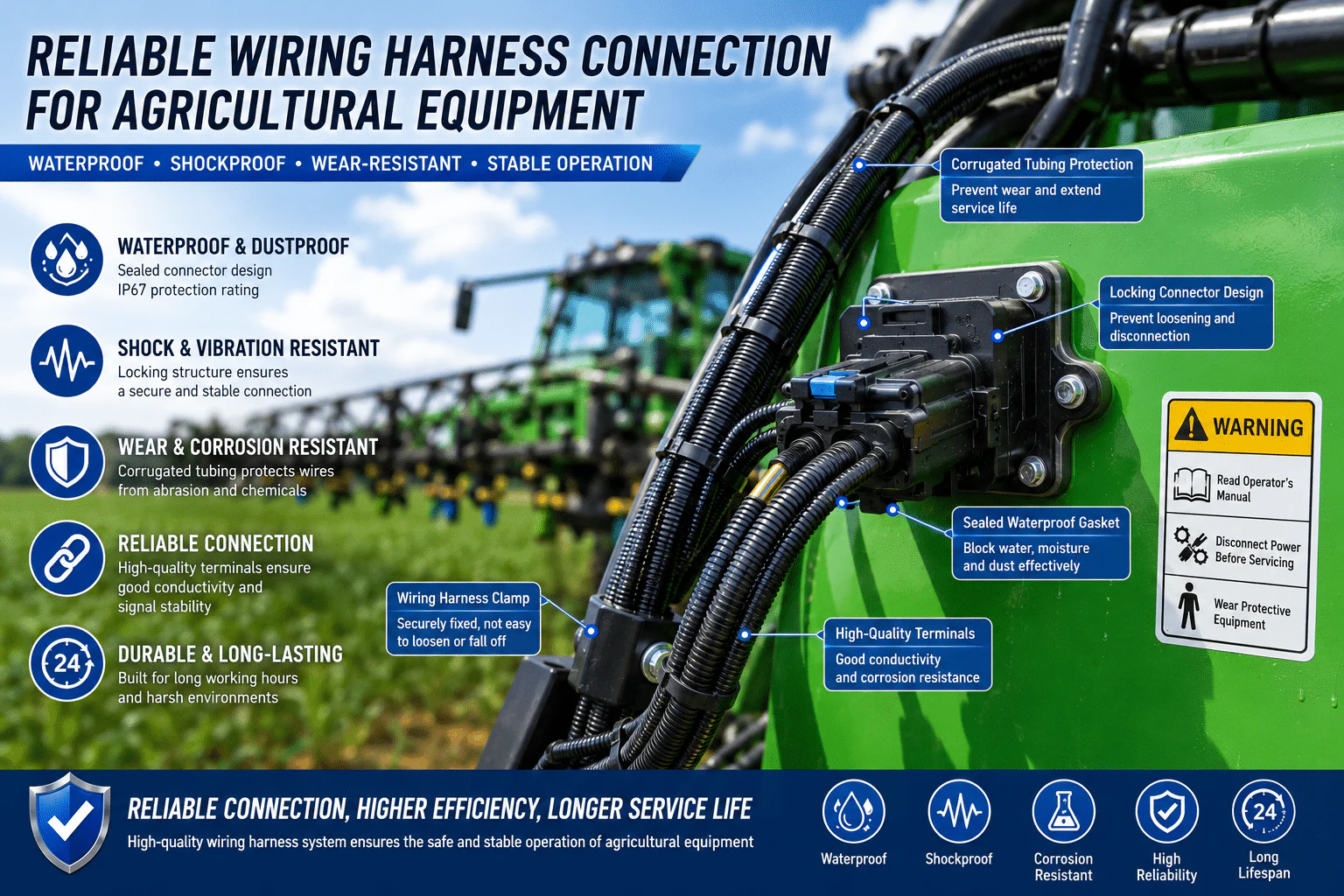
Agricultural Farm machinery wiring harnesses combine wires, connectors and other parts to deliver power and signals. Unlike regular automotive harnesses, they withstand harsh conditions: rain, grime, chemicals, heavy vibration and temperatures from -30°C to above 85°C.
Farm machinery wiring harnesses keep electrical systems running steadily in tough conditions. Quality harnesses stop signal drops from dampness and corrosion, fight UV and chemical damage, stay connected amid vibration, and make repairs easier.
| Feature | Typical Specifications | Description |
| Protection Rating | IP65 / IP67 (Connectors) | Dustproof and waterproof; withstands high-pressure water jet washing |
| Operating Temperature | -40°C to 125°C | Covers all-weather operating conditions for agricultural machinery |
| Chemical Resistance | Resistant to diesel, engine oil, fertilizers, and pesticides | Insulation materials use oil-resistant PVC or TPE |
| Vibration Resistance | 10–500 Hz, 5g acceleration | Passes random vibration testing |
| Flame Retardant Rating | VW-1 or FT1 | Prevents the spread of electrical fires |
| Service Life | 5–10 years (under normal operating conditions) | Depends on environment and frequency of use |
Agricultural wiring harnesses are widely used in various types of power machinery and implements. Below are six typical applications:
1.ractors: Their wiring harnesses link engine, transmission, hydraulics, lights and power output controls, with 80 to 150 connection points in total.
2.Combine Harvesters: Combine harvester wiring connects over 30 sensors, electric regulators, cabin displays and alarms, with total length over 50 meters.
3.Sprayers: Sprayer wiring needs strong chemical resistance against pesticides and fertilizers. Its connectors are IP67-rated to stop liquid seepage and short circuits.
4.Round Balers: Baler wiring manages density adjustment, wrapping and bale discharge, and monitors various sensors. Built to resist wear and tangling amid dust and grass debris.
5.Seeders: Modern precision seeders use sensors to track seeding. Their wiring has 24–48 joints, runs along the frame, and resists soil and fertilizer corrosion.
6.Feed Mixers: Ranch feed mixers’ wiring operates weighing, discharge and mixing systems. The cables stay flexible to endure frequent bending and movement.
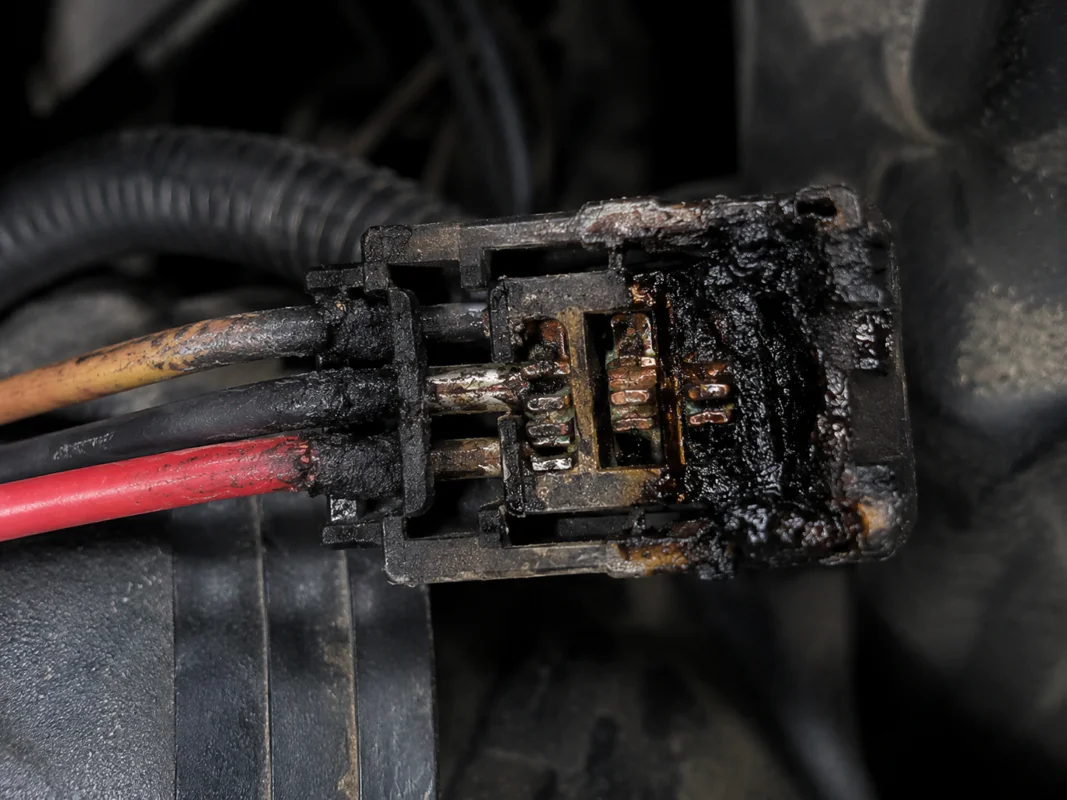
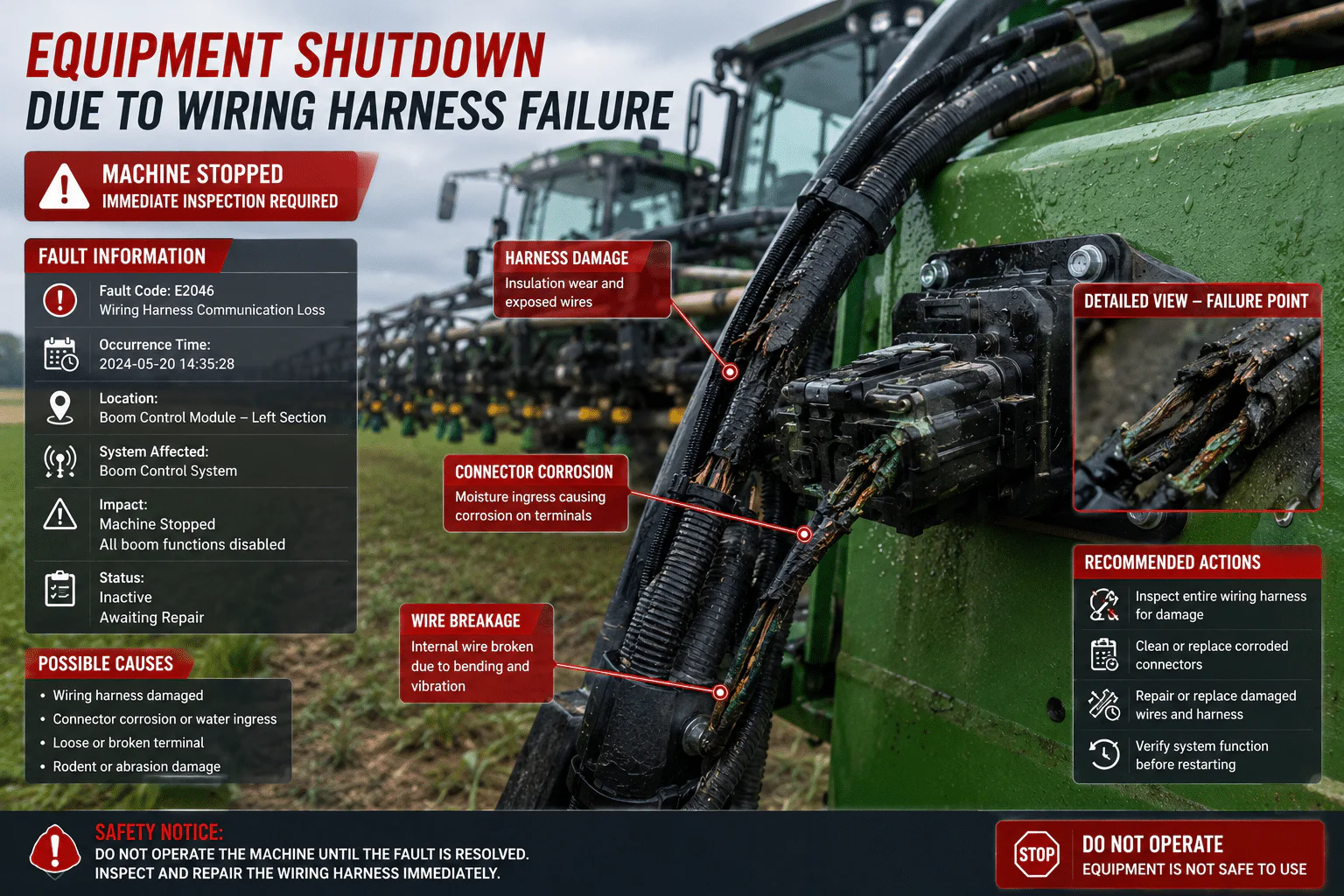
1.Intermittent equipment malfunctions: Low-grade connectors let moisture get inside, corroding terminals and leading to intermittent machine faults.
2.Fire:Choosing the wrong insulation material will make it wear out fast. If it splits and touches the machine body, it can short out, spark and start a fire.
3.Equipment Malfunction: Single-lock connectors can come loose from constant vibration, pulling terminals apart and breaking the machine.
4.Signal Interference: Poor grounding like shared ground wires causes interference, distorting sensor signals and disrupting controls. On ISOBUS farm gear, this can crash the whole system.
Improper harness selection may trigger malfunctions or even fires, bringing costly downtime and repair losses. Wires suggest manufacturers and farm operators work with us for professional customized solutions. Share your working conditions and electrical parameters, and we can provide samples for trial testing. Our field-proven harnesses guarantee stable operation throughout all farm cycles. Feel free to contact us for your tailored solutions.
Enjoy a free sample worth up to $100!
Explore our custom services now. Leave your email, and we'll get intouch!
 English English
 Vietnamese
 Indonesian
 Arabic
 Spanish