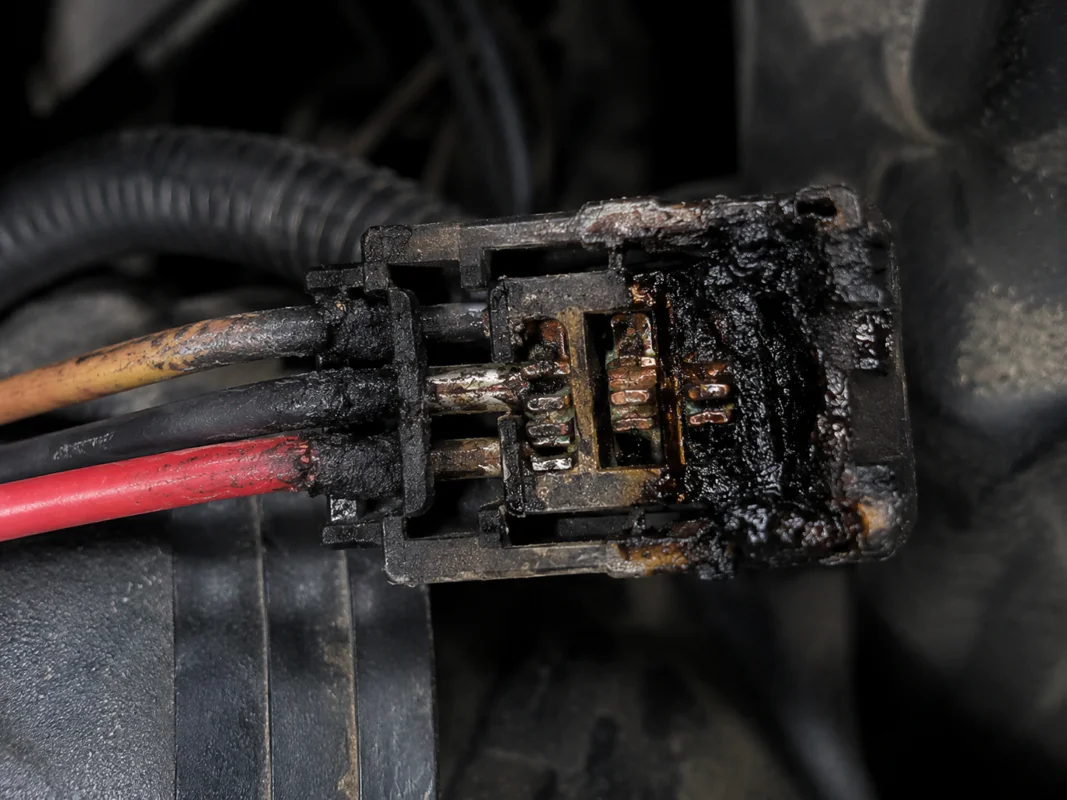


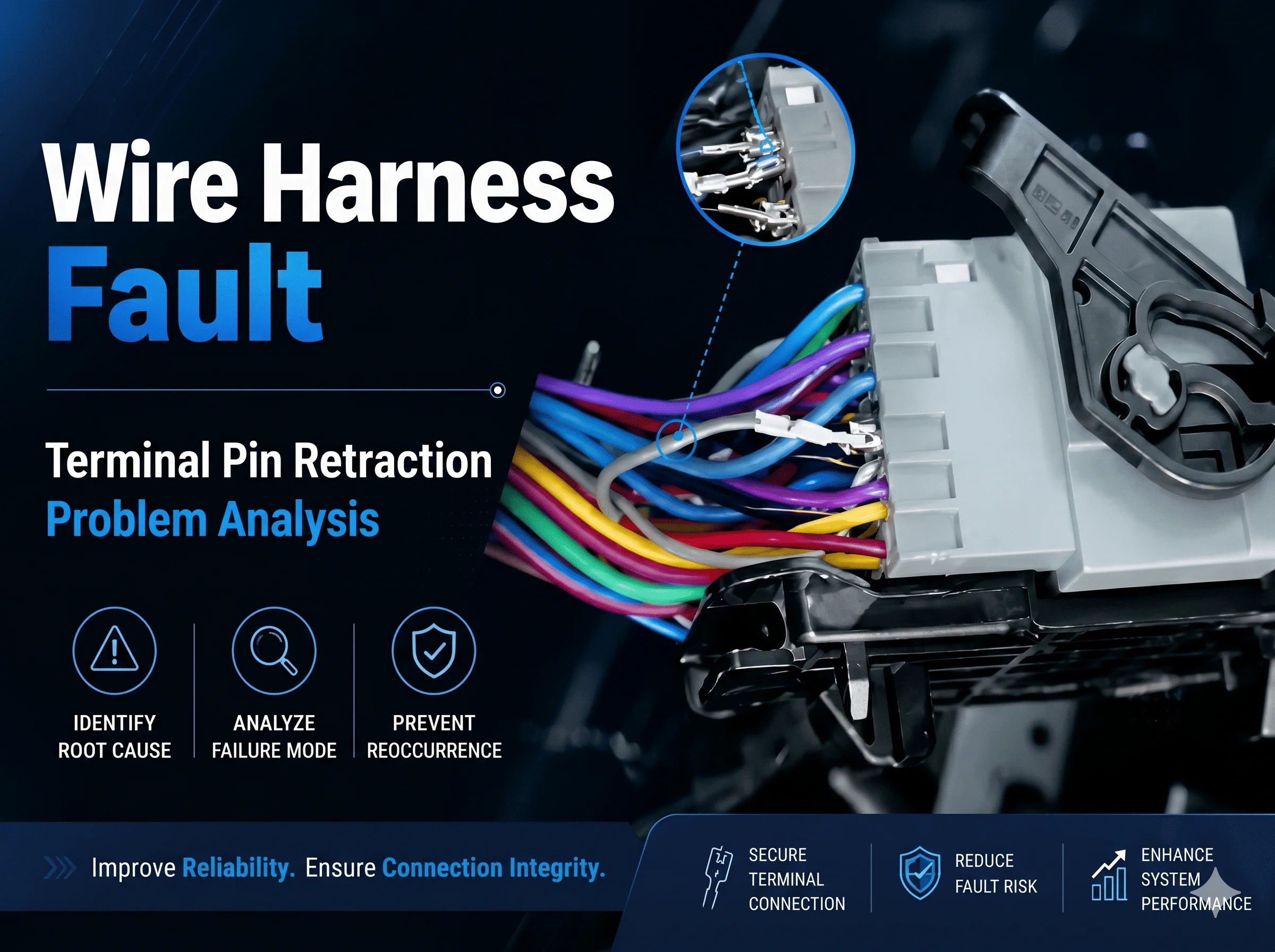
Terminal retraction is a frequent connector fault causing loose circuit and component breakdown. With 11 years of QC experience, we analyze causes & solutions in three aspects. Our qualified products effectively avoid such defects.
Terminal withdrawal means terminals slip out of connector housing after assembly, resulting in poor circuit connection and equipment failure.
Choosing our factory’s optimized terminal products can specifically avoid these hidden dangers, eliminating pin detachment failures at the source.
Terminal withdrawal, caused by incompletely seated terminals, leads to connector faults. Manual assembly of vehicle harnesses keeps this defect risk high. We mitigate terminal pull-out via six full-process controls: design selection, process protection, terminal crimping, assembly, electrical testing and fitting.
Design and Selection: Quality starts with design. To prevent terminal detachment fundamentally, we select optimal materials per five core parameters.(Fig. 1).
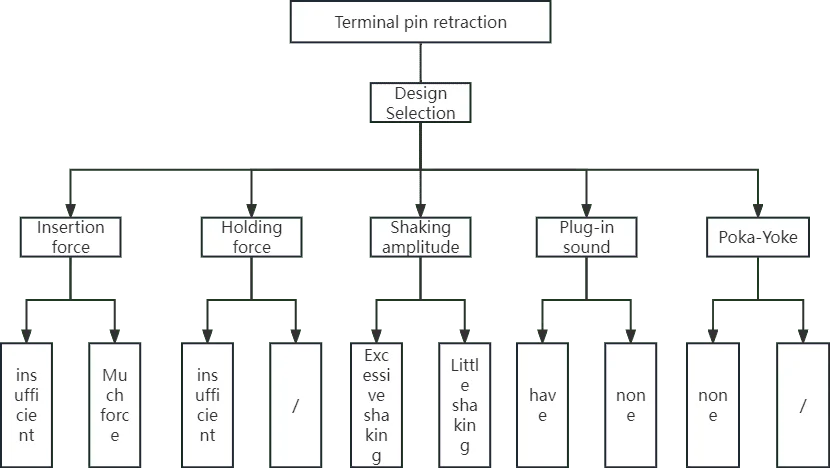
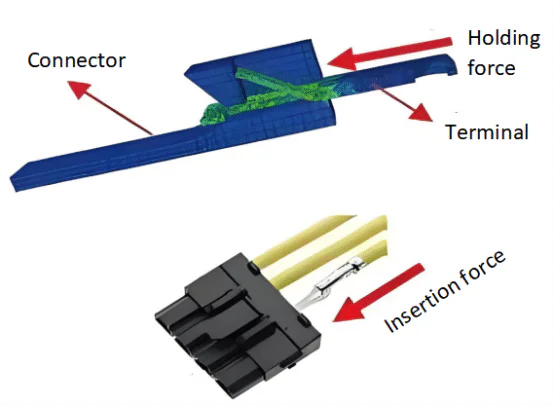
1. Insertion force: Insertion force affects terminal assembly smoothness. Properly low force prevents misassembly and pin retraction, and is a key selection indicator.
2.Holding Force: Lateral holding force resists terminal dislodgement during repeated plugging. We choose terminals with strong locking and high holding force to avoid pin retraction from vibration and impact.(Fig. 2).
3.Fit:Excessive terminal-sheath clearance causes pin retraction. We use matching parts from one brand to control gaps and avoid this issue.
4. Click-to-lock sound: Manual insertion often causes unseated terminals. Our terminals emit a distinct locking click for sound inspection, with stable sound performance and adjustable parameters.(Fig.3).
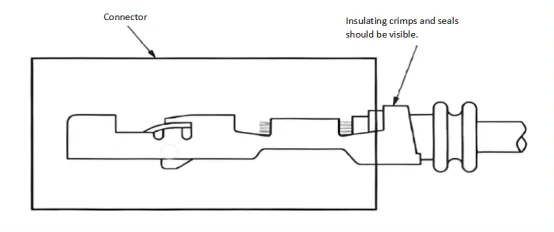
5.Terminal Hole Error-Proof Structure:Our structural design stops reverse terminal insertion, avoiding hidden assembly defects.
6.Process Protection: Terminal pull-out mainly stems from female spring clip distortion and male terminal offset, both triggered by in-process external stress.
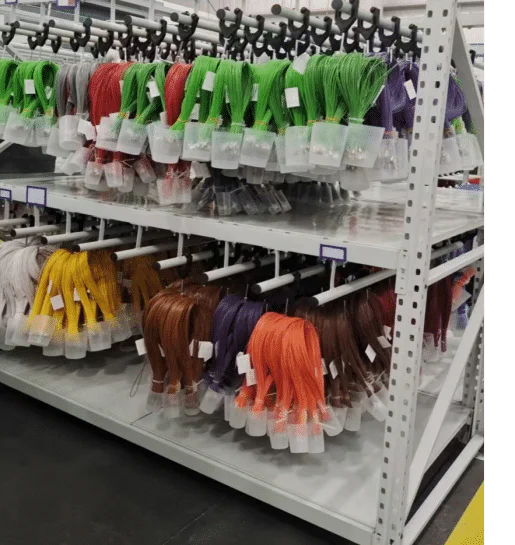
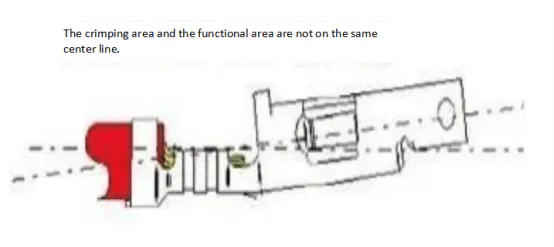
7. Terminal Crimping:Crimping mold defects cause bent “banana” terminals. (Fig.5).Adjust crimping limit pins and check warpage standards to fix the issue.
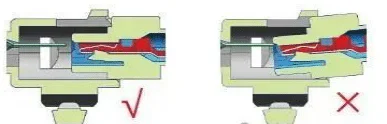
8.Assembly:Manual harness assembly follows the “check, insert, listen, test” process to avoid faulty terminal fitting.
9.Electrical Testing:Electrical testing equipment must meet the following conditions,
First, fit male terminal fixtures with anti-misalignment grids (as shown in Fig.6) to block power from misaligned terminals.
Second, the electrical testing probes must use threaded stepped pins to effectively identify improperly inserted terminals.
Third,Make probes per terminal travel range and schedule regular maintenance.

10. Vehicle Assembly: The insertion and connection actions must be standardized, and the connectors at both ends should be inserted horizontally (Fig.7).
Wires by controlling insertion force, retention, fitting clearance and locking sound at design stage plus full-process production control, we block main causes of terminal back-out. Our mature design and matched raw materials reduce on-vehicle faults and secure long-term circuit reliability.
Enjoy a free sample worth up to $100!
Explore our custom services now. Leave your email, and we'll get intouch!
 English English
 Vietnamese
 Indonesian
 Arabic
 Spanish